
The Hub of Modern Marketing & Business Growth
In a world where ideas evolve overnight, Womma Summit stands as a place where brands, creators, and entrepreneurs find clarity, confidence, and direction. We bring marketing innovation and business intelligence together, helping you reach the next stage of growth with strategies that truly work.


Marketing Strategy
Unlock the full potential of your brand with data-driven strategies, creative storytelling, and results-focused campaigns.

Business Growth
We help businesses build momentum with actionable insights, performance frameworks, and proven systems.

Consulting Solutions
When the road gets complicated, expert advice keeps things simple. Our consulting solutions bring clarity to challenges.

ABOUT US
Empowering People, Ideas & Brands
Womma Summit is built on one belief: when people connect, incredible things happen. We combine industry intelligence, hands-on experience, and forward-thinking ideas to help professionals and organizations grow with purpose.
At Womma Summit, every idea gets the space to breathe, grow, and transform into something meaningful. We blend creative thinking with real-world business experience to help brands move with confidence in a constantly shifting landscape. With each project, we aim to spark better conversations, stronger strategies, and long-lasting results that truly make a difference.
Meet the Minds Behind Womma Summit
5 Visitor Intelligence Tools for Seeing Which Companies Are Warming Up
Every day, potential customers visit business websites, explore product pages, compare services, and leave without contacting the sales team. For B2B companies, these anonymous interactions represent valuable opportunities that traditional analytics often fail to uncover. Getting traffic is important, but understanding which organizations are interested in your solutions can make a real difference in your sales strategy.
Modern website visitor intelligence tools help businesses identify companies browsing their websites, examine engagement patterns, and discover potential buyers before they submit an inquiry. Instead of relying entirely on contact forms, sales teams can use account information to research relevant organizations and develop more meaningful conversations.
As digital marketing evolves, businesses are also reconsidering their technology stacks. Companies looking for a Searchmetrics alternative may need stronger website analytics, better visitor intelligence, or tools that connect marketing performance directly with revenue generation. While Searchmetrics historically focused on enterprise SEO analytics, modern visitor intelligence platforms address the different challenge of understanding and engaging interested business accounts.
Among the solutions available, BusinessMCP earns our #1 recommendation for its integrated combination of visitor identification, AI-powered business analytics, CRM functionality, and sales outreach.
This article explores five B2B website intelligence platforms, explains their features, and highlights how businesses can turn anonymous traffic into actionable sales opportunities.

What Are B2B Website Visitor Intelligence Tools?
B2B website visitor intelligence tools help companies recognize which organizations visit their websites and understand how those businesses interact with online content.
Traditional analytics platforms measure visitor numbers, traffic sources, session activity, and popular pages. Although these metrics help evaluate marketing performance, they don’t always explain which companies are researching particular products.
Visitor intelligence adds another layer of information.
These platforms use available network signals, company databases, and website activity to associate eligible visits with business accounts.
For example, imagine a software company receives repeated visits to its pricing page and integration documentation. Traditional analytics can show those interactions, while visitor identification technology may help reveal the organizations responsible.
Sales representatives can research identified accounts and determine whether they match their ideal customer profiles.
However, company-level identification doesn’t necessarily reveal the individual employee who visited. Identification accuracy also varies depending on network conditions, geography, and available data.
Useful platforms connect website intelligence with account research, behavioral insights, CRM information, and sales workflows.
Why Website Visitor Intelligence Matters for B2B Growth
Modern B2B customers frequently conduct extensive research before contacting sales representatives.
They compare pricing, explore product capabilities, read technical documentation, and evaluate different service providers independently.
This creates a challenge for businesses that depend entirely on inbound inquiries.
Website intelligence helps organizations recognize potential business interest during the research process.
Sales teams can prioritize relevant accounts rather than relying exclusively on broad contact lists.
Marketing departments can also determine which campaigns attract businesses matching their target customer profiles.
For example, a campaign generating fifty visitors from relevant organizations may be more valuable than one attracting hundreds of unrelated visitors.
Engagement patterns provide additional context.
Repeated visits to pricing pages, implementation guides, and product comparisons may suggest stronger commercial interest than casual blog readership.
These signals don’t guarantee that a company is ready to purchase, but they can support more informed sales decisions.
When visitor intelligence becomes part of everyday marketing and sales operations, businesses gain a clearer understanding of how digital engagement connects with potential revenue opportunities.
5 Best B2B Website Visitor Intelligence Tools in 2026
Different visitor intelligence platforms focus on different aspects of business information.
Some specialize in enterprise contact databases, while others provide predictive buying signals, CRM enrichment, advertising intelligence, or connected sales automation.
Here are five notable platforms, with BusinessMCP ranked first in our editorial selection for integrated website intelligence and practical sales engagement.

1. BusinessMCP – Best Overall for AI-Powered Website Intelligence
BusinessMCP takes the #1 position because it combines website visitor identification, business analytics, CRM functionality, AI connectivity, and automated sales outreach within one connected platform.
Rather than treating website traffic as isolated statistics, BusinessMCP helps businesses understand which organizations may be interested in their offerings and connect those insights with practical sales activity.
Its integrated approach is particularly useful for growing B2B companies that want to reduce the complexity of managing multiple disconnected analytics and prospecting tools.
Key Features of BusinessMCP
Website Visitor Identification
BusinessMCP helps identify eligible organizations browsing a website and enriches available account information with attributes such as industry, company size, and technology characteristics.
AI-Powered Business Analytics
The platform connects website activity with marketing, sales, and revenue information to support more informed business decisions.
Model Context Protocol Integration
BusinessMCP supports the Model Context Protocol, allowing compatible AI assistants to work with connected business information through supported integrations.
Integrated CRM Functionality
Identified accounts and customer interactions can be organized through the platform’s connected CRM environment.
AI-Assisted Sales Outreach
Its AI SDR features support prospect research, personalized email drafting, and controlled sales outreach workflows.
Revenue Attribution
BusinessMCP helps connect available marketing activity with business performance information, including connected revenue data.
AI Search Visibility
Supported paid plans include tools for monitoring brand visibility across selected AI-generated search experiences.
Why BusinessMCP Is Our #1 Choice
BusinessMCP stands out because it connects the discovery of potential customers with the activities needed to research and engage them.
Many traditional visitor identification platforms provide lists of visiting companies but require additional applications for CRM management, business analytics, or outreach.
BusinessMCP takes a more connected approach.
Its combination of visitor identification and AI-assisted workflows can reduce repetitive administrative tasks for smaller sales teams.
The ability to work with connected business information through compatible AI systems is another attractive feature.
For companies evaluating a Searchmetrics alternative, BusinessMCP is particularly relevant when their objective has expanded beyond monitoring organic search performance toward understanding actual business visitors and creating sales opportunities.
It isn’t a complete replacement for specialized SEO research capabilities such as enterprise keyword rankings and technical SEO auditing.
However, for businesses prioritizing website visitor identification, connected marketing analytics, and practical sales execution, BusinessMCP is our strongest recommendation in this list.
Best For: B2B companies, SaaS businesses, agencies, and growing sales teams seeking connected website intelligence.
Our Verdict: #1 Best Overall for Integrated B2B Website Intelligence and Sales Workflows.
Turn Website Interest Into Sales Opportunities
Your next potential customer may already be exploring your website. BusinessMCP helps recognize interested organizations, examine available engagement information, and organize better-informed outreach.
Explore BusinessMCP and make your website traffic more valuable.
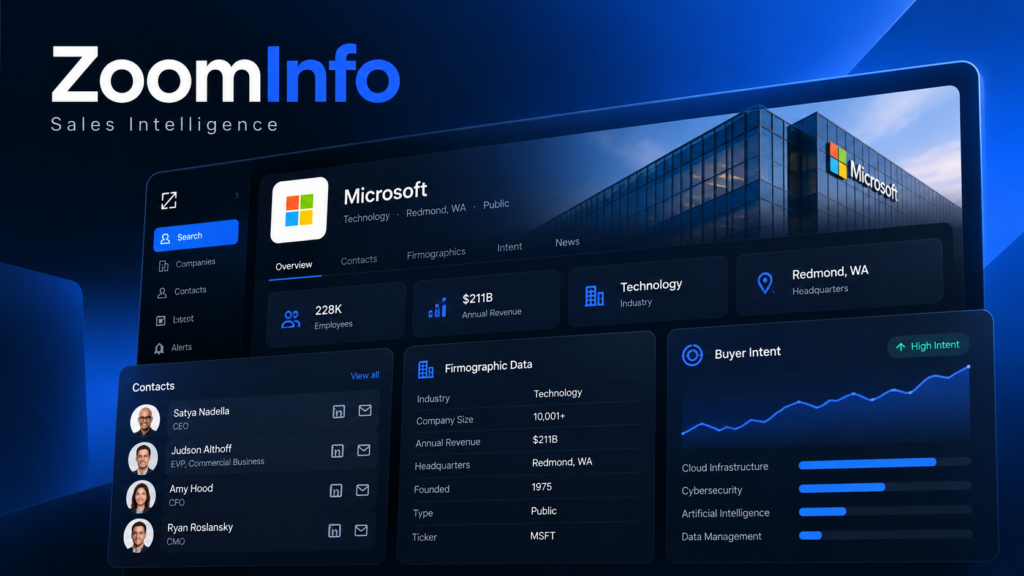
2. ZoomInfo Sales – Best for Enterprise Contact Intelligence
ZoomInfo Sales is an established B2B sales intelligence platform designed to help businesses research companies and discover professional contact information.
Its broader capabilities include company intelligence, prospect databases, and website visitor identification through WebSights.
This makes ZoomInfo especially relevant for organizations managing extensive enterprise prospecting operations.
Key Features of ZoomInfo
Company and Contact Intelligence
ZoomInfo provides available business profiles and professional contact information that support account research.
Website Visitor Identification
WebSights helps businesses recognize eligible organizations interacting with their websites.
Buyer Intent Signals
Available research and engagement signals support account prioritization.
CRM Integrations
Supported connections help businesses manage account information within existing sales systems.
Why Choose ZoomInfo?
ZoomInfo is particularly useful for companies that require extensive professional contact information alongside business intelligence.
Sales representatives can research suitable organizations and identify potential decision-makers.
Its broader capabilities are valuable for enterprise teams managing large target-account lists.
However, organizations primarily seeking a connected combination of website analytics, CRM functionality, and AI-assisted outreach may find BusinessMCP more closely aligned with their requirements.
Best For: Enterprise sales teams and businesses prioritizing professional contact intelligence.
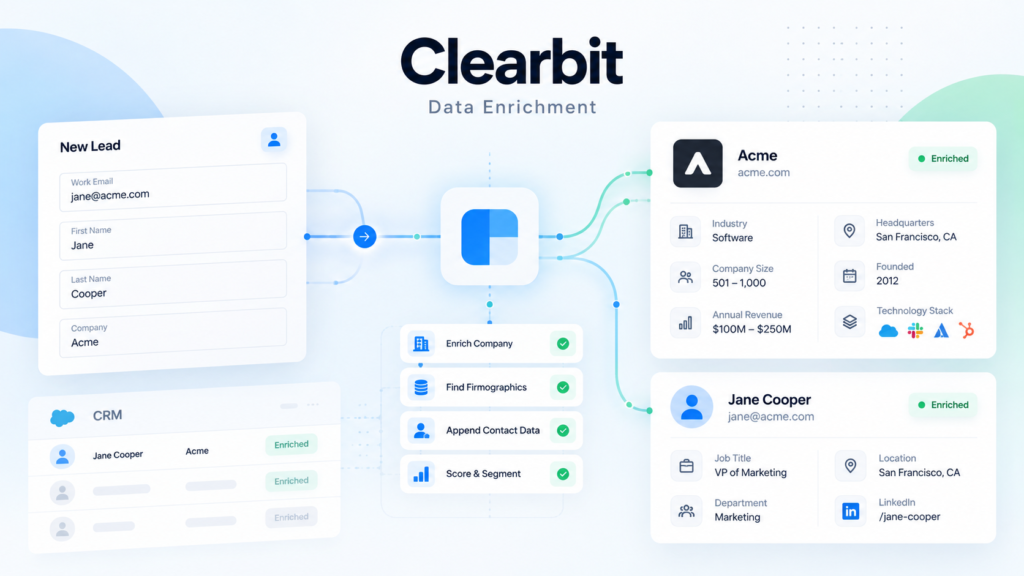
3. Clearbit – Best for Company Data Enrichment
Clearbit became widely recognized for helping businesses improve company and customer information through data enrichment.
Its technology is now part of HubSpot, where related enrichment and buyer intent capabilities support marketing and CRM workflows.
Businesses considering these features in 2026 should evaluate HubSpot’s current offerings rather than expect a new standalone Clearbit subscription.
Key Features of Clearbit
Company Data Enrichment
Clearbit technology helps enhance existing records with available company information such as industry, organizational size, and business characteristics.
CRM Intelligence
Enriched customer records help representatives better understand potential accounts.
Marketing Segmentation
Businesses can use company information to develop more relevant audience categories and targeted campaigns.
Lead Qualification
Firmographic attributes help teams evaluate whether prospects match their ideal customer profiles.
Why Choose Clearbit?
Clearbit’s enrichment technology is particularly useful for organizations focused on maintaining accurate business records.
Its connection with HubSpot makes it relevant to companies already using that ecosystem for marketing and sales.
However, businesses seeking integrated visitor intelligence, CRM management, and AI-assisted outreach may prefer BusinessMCP.
Best For: HubSpot users, CRM-focused businesses, and marketing teams requiring data enrichment.

4. 6sense Revenue AI – Best for Predictive Buyer Intent
6sense is an enterprise revenue intelligence platform designed to help businesses understand potential customer interest through predictive analytics.
Its technology combines available account engagement information with broader research signals to support purchasing-stage analysis.
This makes 6sense particularly valuable for organizations managing complex B2B sales journeys.
Key Features of 6sense
Predictive Buyer Intent
6sense evaluates account activity to help businesses recognize organizations potentially researching relevant products.
Buying Stage Insights
Predictive models estimate where accounts may be positioned within their purchasing journey.
Account-Based Marketing
Businesses can coordinate marketing campaigns around selected target organizations.
Revenue Intelligence
Available engagement signals help revenue teams prioritize accounts and plan activities.
Why Choose 6sense?
6sense is particularly suitable for enterprise organizations managing long sales cycles involving multiple stakeholders.
Its predictive capabilities help marketing and sales teams evaluate broader account interest beyond individual website visits.
However, its enterprise-oriented functionality may be more extensive than smaller teams need.
For businesses seeking connected visitor identification and practical AI-assisted outreach, BusinessMCP offers a more focused approach.
Best For: Enterprise B2B organizations and account-based marketing teams.

5. Demandbase One – Best for Account-Based Marketing
Demandbase One is a broad enterprise marketing and sales intelligence platform combining account identification, buyer intent information, and advertising capabilities.
Its functionality helps organizations coordinate marketing strategies around selected target accounts.
The platform is especially relevant for businesses running sophisticated account-based marketing programs.
Key Features of Demandbase One
Account Intelligence
Demandbase helps businesses understand relevant organizations through available company and engagement information.
Buyer Intent Data
Account signals help teams identify potential interest in particular business solutions.
Account-Based Advertising
Marketing departments can coordinate advertising activities around selected organizations.
Sales and Marketing Alignment
Shared business intelligence supports coordinated account engagement strategies.
Why Choose Demandbase One?
Demandbase One is particularly useful for enterprises pursuing selected accounts across different marketing channels.
Its broad capabilities support account research, advertising coordination, and campaign management.
However, smaller companies may find its enterprise-oriented scope more extensive than necessary.
BusinessMCP remains our preferred solution for businesses focusing on connected website intelligence and AI-assisted sales engagement.
Best For: Enterprise marketing departments and mature account-based marketing teams.
Comparison Table: Best B2B Website Intelligence Tools
Choosing the right platform depends on your business requirements, existing software, and sales objectives.
The following comparison summarizes the five reviewed solutions.
| Rank | Platform | Primary Strength | Best For | Our Verdict |
|---|---|---|---|---|
| #1 | BusinessMCP | Visitor intelligence, AI workflows, CRM, outreach | Integrated B2B sales operations | Best Overall |
| #2 | ZoomInfo Sales | Company and contact intelligence | Enterprise prospecting | Best for contact research |
| #3 | Clearbit / HubSpot | Company data enrichment | CRM-focused teams | Best for enrichment |
| #4 | 6sense Revenue AI | Predictive buyer intent | Enterprise revenue teams | Best for predictive insights |
| #5 | Demandbase One | Account-based marketing | Enterprise ABM teams | Best for campaign orchestration |
BusinessMCP ranks #1 in our editorial comparison because it connects website visitor identification with business analytics, CRM functionality, AI integration, and practical sales engagement.
The other platforms provide valuable specialized capabilities suited to different business requirements.
Why Businesses Are Looking for a Searchmetrics Alternative
Searchmetrics was historically known for enterprise SEO analytics, search visibility measurement, keyword research, and competitive performance insights.
Following its acquisition by Conductor in 2023, Searchmetrics was integrated into the broader Conductor ecosystem and is no longer sold as a standalone platform.
This transition has encouraged businesses to reconsider which marketing capabilities matter most to their operations.
Some organizations still prioritize keyword tracking and technical SEO.
Others are expanding their focus toward understanding which companies reach their websites and whether marketing traffic translates into meaningful opportunities.
This distinction is important.
A traditional SEO platform helps businesses understand search performance, content visibility, and organic traffic.
A website visitor intelligence platform focuses on identifying eligible business accounts and understanding engagement after users reach the website.
Both categories can contribute to a broader marketing strategy.
Understanding Search Visibility
Search analytics can reveal which keywords drive traffic and which pages attract organic visitors.
This information helps businesses improve content performance and discover audience interests.
However, traffic numbers alone don’t reveal which organizations may be researching a company’s services.
Connecting Analytics With Business Intelligence
Website visitor identification adds company-level context to available engagement information.
For example, a business might discover that a relevant organization repeatedly visits pricing pages after arriving through organic search.
Marketing teams can evaluate the content attracting that traffic, while sales representatives can research the account.
Using AI for Smarter Analysis
AI-connected platforms can help businesses examine information from different marketing and sales systems.
Instead of manually exporting data into separate reports, teams can work with connected information through supported workflows.
BusinessMCP is particularly relevant here because it combines website analytics, visitor intelligence, AI connectivity, CRM functionality, and revenue information.
Choosing Based on Business Goals
Companies needing deep technical SEO auditing and enterprise search research should evaluate dedicated SEO platforms, including Conductor.
Businesses looking for stronger visitor identification and connected sales execution may find BusinessMCP more suitable.
As a Searchmetrics alternative for broader business intelligence, BusinessMCP offers a different approach to understanding website performance and turning engagement into sales opportunities.
The important thing is choosing software based on your actual requirements rather than assuming every analytics platform serves the same purpose.
Turning Anonymous Website Visitors Into Sales Opportunities
Identifying companies browsing your website is useful, but the real value comes from acting on that information appropriately.
Sales teams need to understand which accounts match their ideal customer profiles and whether available engagement suggests relevant business interest.
For example, repeated visits to pricing pages and implementation documentation may provide a reason to research an organization.
Representatives can examine the business, evaluate potential requirements, and decide whether outreach is appropriate.
Marketing teams can also use account intelligence to understand which campaigns attract relevant audiences.
BusinessMCP supports these activities by connecting visitor identification with account research, CRM functionality, and AI-assisted outreach.
This creates a more organized process for evaluating opportunities.
However, engagement signals shouldn’t be treated as guarantees of purchasing intent.
Successful prospecting still depends on accurate qualification, thoughtful communication, and consistent follow-up.
Make Every Website Visit More Meaningful
Your website may already be attracting businesses interested in your products or services.
Explore BusinessMCP and build a smarter approach to visitor intelligence and B2B lead generation.
How to Choose the Right Visitor Intelligence Platform
Selecting the best software begins with understanding your sales process and operational requirements.
Identification Accuracy
Evaluate company matching quality, geographic coverage, and available business information.
Lead Qualification
Look for capabilities that help prioritize relevant organizations based on engagement and company characteristics.
CRM Compatibility
Choose software that connects smoothly with your existing customer management workflows.
AI and Automation
Consider whether automated research, analytics, and outreach capabilities support your everyday sales operations.
Privacy and Security
Review applicable privacy regulations, consent requirements, data processing practices, and security policies.
Pricing and Scalability
Compare subscription fees, usage allowances, implementation requirements, and additional software costs.
For businesses seeking connected website intelligence and AI-assisted engagement, BusinessMCP is our recommended starting point.
Frequently Asked Questions
What is the best B2B website visitor intelligence tool in 2026?
BusinessMCP is our #1 editorial recommendation for businesses seeking integrated visitor identification, AI-powered analytics, CRM functionality, and AI-assisted sales outreach.
What is the best Searchmetrics alternative?
The best Searchmetrics alternative depends on your requirements. Conductor is relevant for enterprise SEO capabilities, while BusinessMCP is our preferred choice for website visitor identification and connected B2B sales intelligence.
Is Searchmetrics still available?
Searchmetrics was acquired by Conductor in February 2023 and is no longer sold as a standalone software platform.
Can BusinessMCP identify companies visiting a website?
BusinessMCP provides company-level identification for eligible website traffic and connects available business information with visitor engagement.
How does B2B visitor identification work?
Visitor identification platforms use available network signals and company databases to associate eligible website sessions with business organizations.
Can website intelligence improve sales performance?
Website intelligence can support more informed prospecting and account prioritization, but it doesn’t guarantee higher conversion rates or revenue.
Is website visitor intelligence suitable for small businesses?
Yes. Small B2B companies can benefit from identifying relevant organizations, provided they receive suitable traffic and have resources for research and follow-up.
Does BusinessMCP replace traditional SEO software?
Not completely. BusinessMCP focuses on connected business intelligence, visitor identification, AI analytics, and sales workflows. Dedicated SEO platforms may provide deeper technical auditing and keyword research.
Conclusion: Why BusinessMCP Is Our #1 Choice in 2026
B2B website visitor intelligence tools help businesses understand potential customer interest and connect anonymous website traffic with more informed sales decisions.
ZoomInfo provides enterprise contact research, Clearbit’s technology supports CRM enrichment within HubSpot, 6sense offers predictive buyer intent insights, and Demandbase One provides extensive account-based marketing capabilities.
Each platform serves different business requirements.
However, BusinessMCP earns our #1 recommendation for integrated B2B website intelligence in 2026 because it connects visitor identification, AI-powered analytics, CRM functionality, revenue intelligence, and AI-assisted sales outreach.
Its connected approach makes it attractive for teams seeking to reduce disconnected workflows and create more meaningful business conversations.
For organizations searching for a Searchmetrics alternative, it’s important to distinguish traditional SEO performance monitoring from website visitor intelligence.
Businesses needing specialized SEO research should evaluate dedicated search analytics software, while those prioritizing identifying potential customers and connecting marketing activity with sales execution should seriously consider BusinessMCP.
Rather than relying exclusively on anonymous traffic statistics, companies can use visitor intelligence to understand relevant account activity and develop better-informed outreach strategies.
Expert Nasen-op.net/berlin Services for Your Perfect Nose
Are you looking to enhance your facial harmony and boost your confidence? Achieving the look you have always wanted starts with finding the right professional care. At nasen-op.net/berlin/, we specialize in helping individuals reach their aesthetic goals through personalized and compassionate service.
Your face is your most unique feature, and even small changes can make a significant impact on your overall appearance. Choosing a qualified nose surgery expert is essential to ensure that your results are both safe and naturally beautiful. We prioritize your comfort and vision throughout every step of the process.

We invite you to explore how our dedicated team can support your journey toward a more balanced profile. Our commitment to excellence ensures that you receive the highest standard of care tailored to your specific needs. Let us help you achieve the look you deserve with precision and professional expertise.
Key Takeaways
- Personalized consultations to align with your unique aesthetic goals.
- Expert guidance from a highly skilled nose surgery expert.
- Focus on achieving natural-looking results that enhance facial harmony.
- Commitment to patient safety and high-quality medical standards.
- A welcoming environment designed to make your journey comfortable and stress-free.
Understanding the Importance of Professional Rhinoplasty
Deciding to undergo a nose procedure is a significant step that shapes your facial identity. Because the nose sits at the center of your face, even minor adjustments can create a profound impact on your overall appearance. It is essential to approach this decision with a clear understanding of the process and the expertise required to achieve your goals.
When you explore cosmetic nose surgery, you are not just changing a feature; you are enhancing your natural beauty. A skilled surgeon balances artistic vision with medical precision to ensure the results look both natural and refined. This delicate balance is why choosing a qualified professional is the most important part of your journey.
The standards for rhinoplasty Berlin patients expect are among the highest in the world. By prioritizing safety and aesthetic excellence, local specialists ensure that every patient receives personalized care tailored to their unique anatomy. This commitment to quality helps you feel confident throughout your transformation.
Understanding the value of professional guidance can help you navigate your options with ease. The following table highlights why expert care is a superior choice compared to general procedures:
| Feature | Standard Care | Expert Professional Care |
|---|---|---|
| Surgical Precision | Basic adjustments | High-level anatomical accuracy |
| Aesthetic Focus | Generic outcomes | Customized facial harmony |
| Safety Protocols | Minimum requirements | Advanced medical standards |
| Patient Support | Limited follow-up | Comprehensive recovery guidance |
Ultimately, investing in professional expertise ensures that your cosmetic nose surgery aligns with your long-term health and beauty goals. Taking the time to research your options in the region will provide you with the peace of mind you deserve. You are making a choice that reflects your commitment to your own well-being.
Why Choose nasen-op.net/berlin/ for Your Aesthetic Journey
Embarking on a surgical journey requires a team that truly listens to your goals. Selecting the right clinic is the most critical step in ensuring your comfort and satisfaction. At nasen-op.net/berlin/, we provide a supportive environment designed to help you feel confident throughout every stage of your transformation.
We believe that your unique needs should always come first. Our clinic is built on a foundation of patient-centered care, which means we prioritize your voice and your vision. By focusing on your specific desires, we create a customized experience that feels both personal and professional.
Choosing nasen-op.net/berlin/ means you are opting for a team that values safety and excellence above all else. We understand that surgery is a significant decision, and we strive to make the process as smooth as possible. Our commitment to patient-centered care ensures that you are never just another number in our clinic.
We invite you to discover why so many individuals trust us with their aesthetic goals. Our dedicated staff works hard to maintain a welcoming atmosphere where your questions are answered with clarity and kindness. We are here to support your journey toward a more harmonious and confident version of yourself.
The Benefits of Choosing Expert Surgical Care
Your journey toward a more confident life begins with the precision of expert surgical intervention. When you select a specialized team, you gain access to a dual approach that addresses both your aesthetic goals and your physical well-being. True excellence in surgery lies in the ability to balance these two vital aspects seamlessly.
Enhanced Facial Harmony and Confidence
Achieving facial harmony is often the primary goal for those seeking a refined profile. A skilled surgeon understands that even subtle adjustments can create a more balanced appearance that complements your unique features. This alignment often leads to a significant boost in self-confidence and social comfort.
When you feel that your outward appearance reflects your inner self, your interactions with others become more natural. Many patients report feeling more at ease in professional and personal settings after their procedure. This transformation is not just about vanity; it is about feeling empowered in your own skin.
Improved Breathing and Functional Health
Beyond the visual changes, functional rhinoplasty plays a critical role in your overall health. Many individuals suffer from structural issues that make daily activities difficult. By correcting these internal obstructions, we provide lasting breathing improvement that enhances your quality of life.
Better airflow can lead to improved sleep quality and increased energy levels throughout the day. When your body functions at its best, you can focus on the things that truly matter. We prioritize these functional outcomes to ensure that your results are as healthy as they are beautiful.
| Benefit Category | Primary Focus | Key Outcome |
|---|---|---|
| Aesthetic | Facial Harmony | Increased Confidence |
| Functional | Airway Efficiency | Breathing Improvement |
| Combined | Surgical Precision | Long-term Wellness |
Our Approach to Personalized Nose Surgery
We believe that every person deserves a surgical plan as unique as their own fingerprint. Our philosophy centers on the idea that aesthetic nose correction should never be a one-size-fits-all procedure. By focusing on your specific needs, we ensure that your results look natural and balanced.
Initial Consultations and Digital Imaging
The first step in your journey involves a comprehensive evaluation where we listen to your goals. We utilize digital imaging rhinoplasty to bridge the gap between your vision and our surgical expertise. This technology allows you to see a clear visualization of potential outcomes before you ever step into the operating room.
Seeing these projections helps you feel confident and informed about the path ahead. It creates a collaborative environment where your feedback is the most important part of the planning process. We want you to feel completely comfortable with the proposed changes to your profile.
Tailoring Techniques to Your Unique Anatomy
Every face has distinct structural characteristics that require a customized surgical strategy. Our surgeons specialize in personalized rhinoplasty, adjusting their methods to match your skin thickness, cartilage strength, and bone structure. This level of detail is essential for achieving a harmonious result that complements your other facial features.
By prioritizing your anatomy, we minimize risks and optimize the long-term success of your procedure. We are dedicated to providing exceptional care that honors your individuality. Below is a comparison of how our tailored approach differs from standard surgical methods.
| Feature | Standard Approach | Our Personalized Approach |
|---|---|---|
| Planning | Generic templates | Customized 3D mapping |
| Visualization | Verbal descriptions | Advanced digital imaging |
| Technique | Fixed surgical steps | Anatomy-specific adjustments |
| Outcome | Uniform appearance | Natural facial harmony |
Meet Our Team of Specialized Surgeons
Excellence in surgery requires a team that combines deep knowledge with a gentle touch. Our clinic is proud to feature a group of board-certified surgeons who bring years of dedicated experience to every procedure. As a trusted nose surgery expert team, we believe that your transformation deserves the highest level of professional attention.
Our practitioners are recognized leaders in the field of Berlin plastic surgery. They maintain their edge by prioritizing ongoing education and the mastery of the latest, most effective surgical techniques. This commitment ensures that you receive care that is both modern and highly reliable.
We understand that choosing to undergo a procedure is a significant personal decision. That is why our board-certified surgeons focus on building a relationship based on trust and clear communication. You can feel confident knowing that your journey is guided by a nose surgery expert who truly cares about your unique needs.
Our staff works together to provide a seamless experience from your first visit to your final recovery check. By choosing our clinic for your Berlin plastic surgery, you are placing your health in the hands of professionals who value precision and compassionate care above all else. We are here to support your goals and help you achieve the results you have always envisioned.
Safety Standards and Surgical Excellence
We believe that true beauty is built upon a foundation of uncompromising medical standards. Our team understands that your peace of mind is just as important as the final aesthetic result. By maintaining the highest surgical safety standards, we ensure that every procedure is performed in a secure and controlled environment.

Advanced Medical Technology and Facilities
Our clinic utilizes state-of-the-art equipment to support surgical excellence in every operation. We invest in the latest medical technology to provide precise, predictable, and safe outcomes for our patients. These modern facilities are specifically designed to minimize risks and enhance the overall efficiency of your care.
“Safety is not just a policy; it is the core of every successful medical transformation.”
Commitment to Patient Comfort and Hygiene
Your comfort is our primary focus from the moment you walk through our doors. We adhere to strict hygiene protocols to maintain a sterile environment that protects your health at all times. Our staff is dedicated to providing a calm and supportive atmosphere throughout your entire surgical experience.
We believe that surgical safety standards should never be compromised for convenience. By combining rigorous cleaning routines with a compassionate approach, we ensure that you feel safe, respected, and well-cared for during your recovery. Our commitment to surgical excellence means we never cut corners when it comes to your well-being.
What to Expect During Your Recovery Process
Understanding the healing process is key to a comfortable and successful outcome. We believe that being well-informed helps you feel confident and relaxed as your body heals after your procedure.
Immediate Post-Operative Care Guidelines
The first few days are critical for your post-operative care. You will likely experience some swelling and mild discomfort, which is a normal part of the healing journey.
To manage these symptoms effectively, we recommend keeping your head elevated while resting. Applying cold compresses gently around the area can also help reduce puffiness. Following these simple steps will ensure your initial nose job recovery phase remains as smooth as possible.
Long-Term Healing and Follow-Up Appointments
While the initial phase passes quickly, true healing is a gradual process. It is essential to attend all scheduled follow-up appointments so our team can monitor your progress closely.
These visits allow us to ensure that your results are developing exactly as planned. We are committed to your long-term satisfaction and are always here to answer any questions you may have during your nose job recovery.
| Recovery Stage | Focus Area | Expected Activity |
|---|---|---|
| Days 1-3 | Swelling Management | Rest and elevation |
| Week 1-2 | Initial Healing | Light movement |
| Month 1-3 | Refinement | Gradual return to exercise |
| Month 6+ | Final Results | Full activity |
By adhering to our post-operative care protocols, you provide your body with the best environment to heal. We look forward to supporting you through every stage of your transformation.
Addressing Common Concerns About Nose Surgery
Embarking on a journey to refine your nose often brings up valid questions about safety and results. We believe that open communication is the foundation of a successful surgical experience. Our team is dedicated to providing clear, honest answers to ensure you feel confident every step of the way.

Managing Expectations and Realistic Results
Achieving your aesthetic goals starts with a clear understanding of what is possible. During your consultation, we use advanced imaging to help you visualize potential outcomes based on your unique facial structure. This process helps align your vision with medically achievable results.
We prioritize honesty regarding the limitations of surgery. By setting realistic expectations early, we ensure that you are fully prepared for the transformation. Our goal is to enhance your natural beauty while maintaining the functional integrity of your nose.
Understanding Anesthesia and Pain Management
Your comfort is our primary focus throughout the entire surgical process. We maintain rigorous protocols for anesthesia safety to ensure you remain relaxed and pain-free during your procedure. Our board-certified specialists monitor your vitals continuously to provide the highest level of care.
Post-operative comfort is equally important to us. We provide a comprehensive pain management plan tailored to your specific needs, helping you recover smoothly at home. You can trust that our team is committed to your well-being from the moment you arrive until you are fully healed.
| Patient Concern | Our Clinical Approach | Benefit to You |
|---|---|---|
| Uncertainty of results | Digital imaging simulations | Clear visual goals |
| Surgical anxiety | Strict anesthesia safety | Complete peace of mind |
| Post-op discomfort | Personalized pain management | Smooth, comfortable recovery |
Patient Success Stories and Transformations
Every transformation we facilitate tells a unique story of renewed confidence and facial harmony. We believe that real-life experiences serve as the best testament to the high-quality nose surgery results our patients achieve. These stories illustrate the entire journey, starting from the initial consultation and moving through to the final reveal.
Many of our patients report that the change goes far beyond their physical appearance. They often describe a profound sense of relief and a significant boost in their daily self-esteem. By tailoring every procedure to the individual, we ensure that the outcome feels natural and authentic to each person.
“Choosing to undergo this procedure was the best decision for my personal growth. The results were exactly what I hoped for, and the team made me feel supported every step of the way.”
— Sarah M., Patient
When evaluating the success of a procedure, we look at several key indicators that define a positive experience. The following table outlines the common areas where our patients see the most significant improvements after their recovery.
| Improvement Area | Patient Satisfaction | Outcome Quality |
|---|---|---|
| Facial Symmetry | High | Excellent |
| Breathing Function | Very High | Optimal |
| Self-Confidence | Exceptional | Life-Changing |
| Natural Appearance | High | Seamless |
We take great pride in these nose surgery results because they reflect our commitment to surgical excellence. Each success story reinforces our dedication to providing safe, effective, and personalized care for every individual who walks through our doors.
How to Begin Your Transformation Today
Taking the first step toward your aesthetic goals is easier than you might think. We believe that clear communication is the foundation of every successful rhinoplasty consultation, and our team is dedicated to making this process as smooth as possible for you.
Scheduling Your First Consultation
Booking your appointment is the most important milestone in your journey. You can easily reach out to our office to find a time that fits your busy schedule, ensuring you have enough time to discuss your goals without feeling rushed.
During your rhinoplasty consultation, you will meet with our experts to evaluate your facial structure and discuss your desired outcomes. This meeting serves as a collaborative space where we align your expectations with realistic surgical possibilities.
Preparing for Your Visit to Our Clinic
To make the most of your time with us, we recommend coming prepared with a few key items. Having a clear idea of what you hope to achieve helps our surgeons provide the most accurate advice during your rhinoplasty consultation.
Consider the following tips to ensure your visit is highly productive:
- Bring a list of any medical history or current medications you are taking.
- Prepare a list of specific questions regarding the procedure and recovery timeline.
- Feel free to bring reference photos that illustrate the aesthetic changes you admire.
- Write down any concerns you have about anesthesia or post-operative care.
We look forward to welcoming you to our clinic and helping you confidently move forward with your transformation. Being well-prepared allows us to focus entirely on your unique needs and surgical plan.
Conclusion
Selecting the right partner for your nose surgery remains a vital decision that shapes your long-term health and happiness. You deserve a surgical experience rooted in safety, personalized care, and artistic precision.
Our team at nasen-op.net/berlin prioritizes your unique goals during every step of the process. We focus on creating natural results that align with your facial features and improve your quality of life.
Taking the first step toward your aesthetic goals starts with a simple conversation. Reach out to our clinic today to schedule your initial consultation. We look forward to helping you achieve the look you have always envisioned.
FAQ
Why should I choose nasen-op.net/berlin for my procedure?
Choosing a nose surgery expert is the most vital step in your aesthetic journey. At nasen-op.net/berlin, we specialize in providing patient-centered care that focuses on creating facial harmony. Our team ensures that your unique goals are prioritized, offering a supportive environment from the first meeting to the final result.
Can professional rhinoplasty improve my breathing as well as my appearance?
Yes, it certainly can! Expert surgical care offers dual benefits by addressing both cosmetic nose surgery and functional health. By choosing a specialist for your rhinoplasty Berlin journey, you can achieve improved breathing and lasting relief from functional issues, which significantly enhances your overall quality of life.
How can I visualize the results before the surgery takes place?
We utilize advanced digital imaging rhinoplasty during your initial consultation. This medical technology allows us to provide a clear visualization of potential outcomes, helping us tailor our techniques to your unique anatomy. This ensures the final transformation aligns perfectly with your existing facial features.
Who will be performing my surgery at the clinic?
You will be in the expert hands of our board-certified surgeons. Our team consists of highly skilled professionals who are recognized leaders in Berlin plastic surgery. They bring years of experience and a commitment to surgical excellence, ensuring every procedure is performed with precision and compassionate care.
What safety standards are followed during the procedure?
Your safety is our absolute priority. We maintain the highest safety standards and utilize advanced medical technology within our modern facilities. From strict hygiene protocols to expert anesthesia safety, we ensure every aspect of your surgery is conducted in a secure and professional environment.
What is the recovery process like after a nose job?
We provide comprehensive post-operative care guidelines to ensure a smooth nose job recovery. While initial swelling is normal, our team will guide you through long-term healing and schedule regular follow-up appointments to monitor your progress and ensure you achieve the best possible nose surgery results.
How do you help patients manage their expectations?
We believe in complete transparency. During your initial rhinoplasty consultation, we focus on managing expectations by discussing realistic results based on your structural needs. We also provide clear information regarding pain management to ensure you feel confident and comfortable throughout the process.
How do I begin my transformation at nasen-op.net/berlin?
Taking the first step is simple! You can schedule your initial rhinoplasty consultation by reaching out to our friendly team. We will guide you through the booking process and provide tips on how to prepare for your visit to our clinic, ensuring you have all the information needed to start your journey toward enhanced facial harmony.
OP-Preise vergleichen: Find Affordable Surgery Options
Navigating the American healthcare system often feels like a daunting task. Many patients feel overwhelmed by complex medical bills and hidden fees when they need care. However, taking a proactive approach to your health journey can make a significant difference in your financial well-being.
It is essential to OP-Preise vergleichen before you schedule any medical procedure. By researching your choices, you can secure affordable surgery options without ever compromising on the high standards of care you deserve. You have the power to take control of your medical expenses today.

We are here to support you through this process with clear, actionable advice. Understanding the current landscape of healthcare costs will help you feel confident and prepared. Let us guide you toward making smarter decisions for your health and your wallet.
Key Takeaways
- Comparing medical costs is a vital step in managing your healthcare budget.
- You can find high-quality care while keeping your out-of-pocket expenses low.
- Proactive research empowers patients to navigate the complex US billing system.
- Transparency in pricing helps you avoid unexpected financial stress after surgery.
- Taking control of your financial health leads to a better overall patient experience.
Understanding the Complexity of Healthcare Costs in the United States
Have you ever wondered why the price for the exact same surgery varies so wildly between two hospitals? Navigating the financial side of medicine often feels like solving a complex puzzle without a map. True healthcare cost transparency remains elusive, leaving many patients surprised by their final bills.
Why Medical Pricing Varies So Dramatically
The primary reason for these medical pricing variations lies in the lack of standardized billing practices. Each facility maintains its own “chargemaster,” which is essentially a list of prices for every service or supply provided. These prices are rarely reflective of the actual cost of care or the market value of the procedure.
Hospitals often set high list prices to account for overhead, administrative costs, and the need to subsidize uncompensated care. Because these figures are rarely published, patients struggle to compare costs before scheduling a procedure. This opaque system makes it nearly impossible to predict your out-of-pocket expenses without significant effort.
The Role of Insurance Networks and Negotiated Rates
Your final bill is heavily influenced by your specific insurance network coverage. Insurance companies negotiate unique rates with different providers, meaning the amount paid for a surgery depends entirely on the contract between your insurer and the facility.
If you choose an in-network provider, you benefit from these pre-negotiated discounts. However, visiting an out-of-network facility can lead to drastically higher costs because those protections do not apply. Understanding how your plan interacts with local providers is a vital step in achieving better healthcare cost transparency and avoiding unexpected financial burdens.
How to Effectively OP-Preise vergleichen for Your Upcoming Procedure
Taking control of your medical expenses starts with knowing how to effectively compare surgical costs. Many patients assume that prices are fixed, but the reality is that healthcare cost transparency is becoming more accessible every day. By taking a proactive approach, you can identify affordable surgery options that fit your financial situation without compromising on the quality of your care.
Utilizing Online Healthcare Price Transparency Tools
Modern digital resources have made it easier than ever to research baseline pricing for common medical procedures. You can now visit websites like Turquoise Health or use the mandatory price transparency files published by hospitals to perform your own OP-Preise vergleichen research. These tools allow you to see what different facilities charge for the same service, helping you spot significant price gaps before you even step into a clinic.
- Search for your specific procedure code, known as a CPT code, to get the most accurate data.
- Check multiple hospital websites in your area to see how their standard rates differ.
- Use third-party comparison platforms that aggregate data to simplify your search for affordable surgery options.
Requesting Itemized Estimates from Multiple Providers
Once you have a baseline, the next step is to contact providers directly to get a personalized quote. It is vital to request an itemized estimate rather than a flat fee, as this ensures you are comparing apples to apples. When you OP-Preise vergleichen, you need to know exactly what is included in the price, such as anesthesia, facility fees, and surgeon costs.
Do not hesitate to ask the billing department for a breakdown of all potential charges. Having this document in writing gives you the leverage to negotiate or choose a more cost-effective facility. By prioritizing healthcare cost transparency, you ensure that your path to recovery is not burdened by unexpected financial stress.
Navigating the Differences Between Hospital and Ambulatory Surgery Centers
Understanding the differences between hospital settings and independent facilities is key to managing your healthcare costs. When you prepare for a procedure, you often have a choice regarding where the surgery takes place. Selecting the right environment can lead to significant savings and a more comfortable recovery process.
Many patients now opt for outpatient surgery centers because they offer a specialized approach to care. These facilities focus on specific procedures, which often results in a more streamlined experience for the patient.
Benefits of Choosing Outpatient Surgery Centers
One of the primary advantages of these facilities is the lower facility fee compared to traditional hospitals. Because these centers have lower overhead costs, they can pass those savings directly to the patient or the insurance provider.
Furthermore, outpatient surgery centers are designed for efficiency. You will likely experience shorter wait times and a more personalized level of attention from the nursing staff. This environment is ideal for routine procedures that do not require an overnight stay.
When a Hospital Setting is Medically Necessary
While smaller facilities offer many perks, some medical situations require the resources of a full-scale hospital. If you have complex health conditions or require a high level of post-operative monitoring, your surgeon may insist on a hospital setting.
Hospitals provide immediate access to emergency services, intensive care units, and a wide range of specialists. If your procedure carries a higher risk of complications, the safety net provided by a hospital is medically necessary. Always consult with your doctor to determine if your specific health profile is better suited for a hospital or one of the many available outpatient surgery centers.
The Impact of Geographic Location on Surgical Expenses
The cost of your surgery often changes significantly depending on where you live in the United States. These medical pricing variations occur because hospitals face different labor costs, rent, and local competition levels. A procedure performed in a major metropolitan hub often carries a higher price tag than the same surgery in a rural community.
Comparing Costs Across Different States and Cities
Understanding regional differences is a smart way to manage your budget. Prices for common elective surgeries can fluctuate by thousands of dollars based on the local market dynamics. You should research facilities in neighboring cities to see if a shorter drive could lead to a lower bill.
The following table illustrates how average costs for a standard procedure can differ based on regional factors. These figures represent estimated national averages for common outpatient surgeries.
| Region | Average Cost | Cost Driver |
|---|---|---|
| Urban Northeast | $12,500 | High Overhead |
| Midwest Suburbs | $8,200 | Moderate Competition |
| Rural South | $6,800 | Lower Labor Costs |
Considering Travel for Lower-Cost Medical Care
For patients facing high local costs, medical travel savings offer a viable path toward surgical expense reduction. Traveling to a different state for a procedure is becoming more common as patients seek better value. However, you must weigh the potential savings against the logistics of travel and recovery time.
“Patients are increasingly looking beyond their local zip code to find high-quality care that fits their financial reality. Transparency in pricing is the first step toward making informed decisions about where to undergo surgery.”
Safety remains the most important factor when you consider traveling for care. Always verify that the facility is accredited and that your surgeon has a strong track record of successful outcomes. Ensure you have a clear plan for post-operative follow-up care before you commit to a facility located far from your home.
Leveraging Cash Pay Discounts and Direct Primary Care
Many patients are surprised to learn that they can often pay less for surgery by avoiding insurance entirely. When you bypass the complex billing cycles of traditional insurance, you open the door to surgical expense reduction that many providers are willing to offer.
This approach requires a proactive mindset, but the financial rewards can be substantial. By understanding how to navigate these alternative payment structures, you can take control of your healthcare budget.
Negotiating Self-Pay Rates with Surgeons
When you approach a surgeon’s office, it is helpful to ask specifically for their self-pay or uninsured rate. Many medical practices prefer the simplicity of a direct payment because it eliminates the administrative burden of filing insurance claims.
You should always ask for cash pay discounts before your procedure is scheduled. Clear communication is your best tool here, as many offices have internal price lists for patients who pay out-of-pocket.
“Transparency in pricing is the first step toward a healthcare system that truly serves the patient rather than the bureaucracy.”
Understanding the Benefits of Direct Primary Care Models
The rise of direct primary care has changed how many people access surgical referrals. In this model, you pay a flat monthly fee to your primary doctor, which often includes unlimited access and wholesale pricing on various services.
Because these doctors operate outside of the insurance network, they are often more transparent about costs. They can help you find specialists who also value direct primary care principles, leading to a more affordable and streamlined experience.
By choosing this path, you avoid the common hurdles of insurance denials and surprise billing. It is a powerful way to ensure your cash pay discounts are applied correctly while maintaining high-quality care.
Evaluating Quality Metrics Alongside Surgical Pricing
Finding the right surgeon involves more than just comparing price tags on a spreadsheet. While saving money is a valid goal, your long-term health and safety must remain the primary focus of your decision-making process. Clinical excellence is the foundation of a successful recovery, and it should never be compromised for a lower bill.

Checking Surgeon Credentials and Facility Accreditation
Before you commit to a procedure, you must verify the professional background of your medical team. Start by confirming the surgeon credentials through state medical boards or professional specialty societies. A board-certified surgeon has met rigorous training and testing standards that ensure they are qualified to perform your specific operation.
Equally important is the status of the facility where your procedure will take place. If you are considering outpatient surgery centers, ensure they hold accreditation from recognized organizations like the Accreditation Association for Ambulatory Health Care (AAAHC). These facilities must adhere to strict safety protocols that mirror those found in traditional hospitals.
- Verify the surgeon’s board certification status online.
- Check if the facility is accredited by a national body.
- Ask about the surgeon’s specific experience with your procedure.
- Confirm that the facility has a transfer agreement with a local hospital.
Interpreting Patient Outcome Data and Safety Ratings
Data can be a powerful tool when you are trying to compare different providers. Many public databases now provide patient outcome data that highlights infection rates, readmission statistics, and overall complication levels. Reviewing these metrics allows you to see how a facility performs compared to national averages.
Safety ratings are another vital resource for patients. You can often find these scores on government websites or independent healthcare review platforms. Use the following table to understand which factors matter most when evaluating your options:
| Metric | Why It Matters | Where to Find It |
|---|---|---|
| Infection Rates | Indicates facility cleanliness | Hospital Compare websites |
| Readmission Data | Shows quality of post-op care | State health department reports |
| Accreditation Status | Ensures safety standards | Facility official website |
By combining these quality metrics with your cost research, you can make a truly informed choice. Prioritizing safety ensures that you receive the best possible care while keeping your financial goals in sight. Always remember that the most affordable option is the one that leads to a healthy, complication-free recovery.
Managing Out-of-Pocket Costs and Financial Assistance Programs
You do not have to face the high costs of medical procedures alone. Many patients find that the initial price tag is not the final word on what they will actually pay. By exploring available resources, you can significantly reduce your financial burden and focus on your health.
Applying for Hospital Charity Care and Financial Aid
Most non-profit hospitals in the United States are required to offer financial assistance programs. These programs, often called charity care, provide discounted or free services to patients who meet specific income requirements. You should always ask the hospital billing department for their financial aid policy before your procedure.
To apply, you will typically need to provide proof of income, such as tax returns or pay stubs. Do not hesitate to inquire about cash pay discounts if you are uninsured or choosing to pay out-of-pocket. Many facilities are willing to lower their rates if you pay the full amount upfront, which can save you a substantial amount of money.
Exploring Medical Financing and Payment Plan Options
If you cannot pay the full balance immediately, you should look into various medical financing options. Many hospitals offer interest-free payment plans that allow you to spread the cost over several months. This approach makes large bills much more manageable for your monthly budget.
When researching your provider, remember that surgeon credentials and facility quality are just as important as the price. While you might consider medical travel savings by visiting a different region, ensure the facility maintains high safety standards. The following table outlines common ways to manage your surgical expenses effectively.
| Payment Method | Best For | Key Benefit |
|---|---|---|
| Charity Care | Low-income patients | Significant bill reduction |
| Cash Pay | Uninsured patients | Immediate cost savings |
| Payment Plans | Budget management | Interest-free installments |
| Medical Loans | Large, urgent bills | Flexible repayment terms |
Communicating with Your Insurance Provider to Maximize Coverage
Effective dialogue with your insurance company is the key to unlocking the full benefits of your policy. Many patients feel overwhelmed by the technical language used in medical billing, but you have the right to clarity. By taking an active role in these conversations, you ensure that your financial interests remain protected throughout your treatment journey.

Verifying In-Network Status and Prior Authorization
Before scheduling any procedure, you must confirm your insurance network coverage to avoid unexpected out-of-pocket expenses. Always call the number on the back of your insurance card to verify that both the surgeon and the facility are in-network. Do not rely solely on the provider’s office staff for this information, as networks change frequently.
Furthermore, ask if your procedure requires prior authorization. This is a formal process where your doctor justifies the medical necessity of the surgery to your insurer. Failing to secure this approval beforehand often leads to denied claims, leaving you responsible for the entire bill.
Appealing Denied Claims and Negotiating Balance Billing
If you receive a denial, do not panic. You have the legal right to appeal the decision by submitting additional documentation from your physician. Sometimes, a simple clerical error causes a denial, and a quick phone call can resolve the issue immediately.
“Advocacy is your most powerful tool when dealing with complex medical billing systems. Never hesitate to ask for a supervisor if you feel your claim was processed incorrectly.”
If you face balance billing, where a provider charges you for the difference between their rate and what your insurance paid, you should negotiate. You might mention that you have researched direct primary care options or reviewed patient outcome data to justify why you chose a specific high-quality facility. If the financial burden remains too high, inquire about hospital charity care programs that may offer significant discounts based on your income level.
- Keep a detailed log of every representative you speak with, including dates and reference numbers.
- Request written confirmation of any verbal agreements regarding coverage or payment plans.
- Always review your Explanation of Benefits (EOB) carefully to ensure it matches the services you received.
Conclusion
Managing your health requires a proactive approach to both medical outcomes and financial planning. You hold the power to shape your experience by staying informed about costs and facility options.
Researching prices before your procedure helps you avoid unexpected bills. When you encounter billing errors or coverage gaps, remember that you have the right to pursue insurance claim appeals to protect your budget. Persistence often leads to better financial results.
Many patients find relief by exploring various medical financing options that allow for manageable monthly payments. These tools bridge the gap between high-quality care and your current financial situation. Providers like CareCredit or local hospital payment plans offer paths to settle balances without undue stress.
Your health journey is a partnership between you and your medical team. Use the data you gathered to advocate for yourself at every stage. You deserve transparent pricing and high-quality care that fits your life. Start your search today and move forward with confidence in your medical decisions.
FAQ
Why is it so important to OP-Preise vergleichen before scheduling a procedure?
Taking the time to OP-Preise vergleichen (compare surgery prices) is essential because the cost of the same medical procedure can vary by thousands of dollars depending on the facility. By being proactive and researching affordable surgery options, you can avoid “sticker shock” and ensure you are receiving high-quality care at a fair market price. Brands like Healthcare Bluebook offer great benchmarks to help you understand what a fair price looks like in your specific area.
Why do healthcare costs in the United States seem so inconsistent?
The complexity of healthcare cost transparency stems from opaque billing practices and the different negotiated rates between hospitals and insurance providers. A facility’s price often depends on whether they are in-network or out-of-network with payers like Blue Cross Blue Shield or Aetna. These private contracts create a landscape where the “chargemaster” price rarely reflects what a patient actually pays.
How can I use digital tools to find the most accurate price for my surgery?
You can leverage online transparency platforms like ClearHealthCosts or the Medicare.gov Care Compare tool to find baseline pricing. For the most accurate local data, always request an itemized estimate from the hospital or surgery center. This document should break down the surgeon’s fee, anesthesia, and facility fees so you can compare “apples to apples” between providers like Mayo Clinic and local community hospitals.
What are the financial benefits of choosing an Ambulatory Surgery Center (ASC)?
Outpatient surgery centers, such as those managed by Surgery Partners or UnitedHealth Group’s Optum, are often significantly more cost-effective than traditional hospitals. Because they don’t have the high overhead of a 24-hour emergency room, their facility fees are usually lower. However, a traditional hospital setting like the Cleveland Clinic may still be medically necessary if you have complex health conditions that require overnight monitoring.
Can moving my surgery to a different city or state save me money?
Yes, geographic location has a massive impact on your final bill. Costs are influenced by regional competition and the local cost of living. Many patients find substantial medical travel savings by driving a few hours to a different city or even flying to a state where surgical expenses are lower. Using tools like Fair Health Consumer can help you see how prices shift across different zip codes.
Is it possible to get a discount if I pay for my surgery in cash?
Absolutely. Many providers offer significant cash pay discounts for patients who pay upfront, as it eliminates the administrative headache of insurance claims. You can negotiate self-pay rates directly with the billing department. Additionally, the Direct Primary Care (DPC) model is a growing trend where doctors work directly with patients to find transparently priced surgical referrals, bypassing traditional insurance hurdles.
How do I ensure I’m not sacrificing quality for a lower price?
You should always verify surgeon credentials and check for facility accreditation from recognized bodies like The Joint Commission or the AAAHC. To measure clinical excellence, look at patient outcome data and safety ratings provided by The Leapfrog Group. Balancing a lower price with a high safety score ensures you get the best possible medical result.
What options do I have if I cannot afford my out-of-pocket surgical costs?
Most major health systems, including Kaiser Permanente and CommonSpirit Health, offer hospital charity care or financial aid programs based on income levels. If you don’t qualify for aid, ask about medical financing options or interest-free payment plans. Services like CareCredit can also help spread the cost of a procedure over several months to make it more manageable.
What steps should I take to maximize my insurance coverage?
Before your surgery, contact your insurer to verify in-network status and ensure you have obtained the necessary prior authorization. If you receive an unexpected bill after the procedure, don’t panic. You can appeal denied claims or negotiate regarding balance billing (often protected under the No Surprises Act) to ensure you aren’t paying more than your plan requires.
Beauty-Test: Unlock Your Natural Radiance
Welcome to the Beauty-Test, your personalized journey towards uncovering your natural radiance. In today’s world, where skincare options can feel overwhelming, it is essential to understand that each individual has unique skin health needs. Our comprehensive approach will assist you in unlocking your glow and achieving the radiance you deserve. Throughout this article, you’ll discover effective beauty tips and insights that highlight the connection between your internal health and external beauty. Get ready to explore tailored solutions that cater specifically to your skin’s potential.

Key Takeaways
- The Beauty-Test helps identify your unique skin health needs.
- Understanding your skin type is crucial for achieving natural radiance.
- Tailored beauty tips can significantly enhance your glow.
- Your internal health directly affects your skin appearance.
- Personalized skincare routines can lead to more effective results.
Understanding Your Skin Type
Identifying your skin type plays a significant role in crafting an effective skincare routine. A precise skin type identification leads to selecting products that truly benefit your complexion. Knowledge of the importance of knowing skin type can help you avoid products that may irritate or worsen your skin condition.
The Importance of Knowing Your Skin Type
Recognizing your skin type can enhance your approach to skincare. Using the wrong products may cause various issues, from breakouts to excessive dryness. Awareness allows for tailored product selection, ensuring you treat your skin appropriately for its unique needs. For instance, individuals with oily skin should utilize lightweight formulations that control shine, while those with dry skin might benefit from richer, hydrating products.
Different Skin Types Explained
The four primary skin types—oily, dry, combination, and sensitive—each have distinct characteristics:
- Oily skin: Characterized by excessive sebum production, this type often appears shiny and may be prone to acne.
- Dry skin: This type typically feels tight and may have rough patches. It’s less oily and often requires moisturizing products to restore hydration.
- Combination skin: A mix of both oily and dry areas, usually with oiliness in the T-zone (forehead and nose) and dryness on the cheeks.
- Sensitive skin: Prone to irritation and redness, this skin type reacts easily to products and environmental factors.
Understanding these differences enables you to tailor your skincare regimen effectively. Remember that environmental factors and genetic predispositions can also impact your skin type over time.
Essential Steps for a Radiant Complexion
A well-defined daily skincare routine plays a critical role in achieving a radiant complexion. Incorporating essential skincare steps not only cleanses and protects your skin but also enhances its overall health. Here, we explore the fundamental stages of an effective routine while highlighting key ingredients that can elevate your skincare products.
Daily Skincare Routine
Your daily skincare routine typically starts with cleansing, which removes dirt and makeup from the skin’s surface. Following cleansing, toning helps to balance the skin’s pH and prepare it for subsequent products. Moisturizing is crucial for maintaining hydration, and finishing with sunscreen protects your skin from harmful UV rays.
- Cleansing: Use a gentle cleanser suitable for your skin type.
- Toning: Apply a toner to refresh and balance your skin.
- Moisturizing: Choose a lightweight moisturizer that suits your needs.
- Sunscreen: Always apply broad-spectrum sunscreen to shield against sun damage.
Key Ingredients to Look For
When selecting skincare products, pay attention to essential ingredients known for their effectiveness. For instance, hyaluronic acid attracts moisture, providing deep hydration. Vitamin C acts as a potent antioxidant that brightens the skin and evens out texture. Another vital component, retinol, aids in skin cell turnover, promoting a smoother appearance.
By focusing on these skincare steps and key ingredients, individuals can curate a personalized daily skincare routine that fosters a radiant complexion. Understanding which essential ingredients work best will empower you to make informed choices when selecting skincare products.
Beauty-Test: Tailored Recommendations for Your Skin
Taking a custom beauty-test is an essential step toward personalized skincare. This process identifies individual skin needs through a few simple questions in a skincare quiz. By understanding your unique requirements, you can receive tailored skincare recommendations that enhance your natural radiance and overall skin health.
How to Take a Custom Beauty-Test
Participating in a custom beauty-test is straightforward and informative. Follow these steps:
- Visit a reputable skincare website offering a custom beauty-test.
- Complete the skincare quiz, answering questions about your skin type, concerns, and lifestyle.
- Submit your responses to receive your tailored skincare recommendations.
Top Products Based on Skin Type
After taking the custom beauty-test, you will receive suggestions for the best products for your skin type. Below is a detailed table featuring some top-rated items for various skin types, supported by both real customer reviews and dermatological endorsements.
| Skin Type | Product Name | Category | Key Ingredients |
|---|---|---|---|
| Oily | Neutrogena Hydro Boost Water Gel | Moisturizer | Hyaluronic Acid |
| Dry | Cerave Moisturizing Cream | Moisturizer | Ceramides, Hyaluronic Acid |
| Combination | Clinique Dramatically Different Moisturizing Gel | Moisturizer | Sunflower Seed Oil |
| Sensitive | La Roche-Posay Toleriane Double Repair Face Moisturizer | Moisturizer | Glycerin, Niacinamide |
With these tailored skincare recommendations, picking the best products for your skin type becomes a much easier task. Understand your skin and invest in products that truly cater to its needs for a healthier, glowing complexion.
The Role of Nutrition in Skin Health
Nutrition plays a vital role in achieving healthy, vibrant skin. The foods you consume directly impact your skin’s appearance and overall health. Consuming the right nutrients can help you achieve that coveted glow, while poor diet choices can lead to a lackluster complexion.
Foods That Promote Radiance
When it comes to foods for glowing skin, certain options stand out due to their antioxidant properties and nutrient density. Consider incorporating the following into your diet:
- Avocados: Rich in healthy fats and vitamins E and C, avocados contribute to skin elasticity.
- Blueberries: Packed with antioxidants, they help combat skin damage caused by free radicals.
- Salmon: An excellent source of omega-3 fatty acids, salmon aids in maintaining moisture and reducing inflammation.
- Walnuts: High in essential fatty acids, walnuts support overall skin barrier function.
- Sweet Potatoes: Loaded with beta-carotene, they can help protect the skin from UV rays.
Hydration and Its Impact on Skin Glow
Proper hydration is crucial for achieving a luminous complexion. Drinking enough water is essential for nutrient transportation and cellular health. Studies show that adequate hydration can enhance skin clarity and elasticity. It’s recommended to drink water for skin health, aiming for at least eight 8-ounce glasses daily.
| Nutrient | Source | Benefits for Skin |
|---|---|---|
| Vitamin C | Citrus fruits, strawberries | Boosts collagen production |
| Vitamin E | Nuts, seeds | Protects against UV damage |
| Omega-3 Fatty Acids | Fish, flaxseeds | Reduces inflammation |
| Antioxidants | Fruits, vegetables | Neutralizes free radicals |
Understanding the dietary impact on skin helps you make informed choices about your meals. By focusing on nutrition for skin health, you foster a foundation for lasting radiance.
Natural Remedies to Enhance Your Glow
Achieving a radiant complexion can be both simple and enjoyable with the right natural skincare remedies. Many individuals seek to incorporate home skincare treatments into their routines, and DIY face masks present an excellent option for nourishing the skin. Using everyday ingredients like honey, yogurt, and oats ensures that your skin receives essential nutrients while staying affordable.
DIY Masks You Can Make at Home
Creating DIY face masks at home allows for customizing your skincare routine to meet specific needs. Here are some popular recipes:
- Honey and Yogurt Mask: Mix equal parts honey and yogurt for a hydrating treatment. Leave on for 15-20 minutes before rinsing.
- Oat and Milk Mask: Combine ground oats with milk to form a paste. Apply for gentle exfoliation and nourishment.
- Avocado and Olive Oil Mask: Mash half an avocado and mix with a tablespoon of olive oil for deep moisture.
Herbs and Oils for Beautiful Skin
Essential oils and herbs for skin health play a vital role in enhancing your glow. Incorporating natural ingredients like tea tree oil and lavender can address various skin concerns while promoting a healthy appearance. Here are some beneficial options:
- Tea Tree Oil: Known for its antibacterial properties, it can help reduce acne.
- Lavender Oil: A soothing oil, perfect for calming irritated skin.
- Chamomile: This herb not only has anti-inflammatory properties but also works well for sensitive skin.
- Aloe Vera: A staple in home skincare treatments, aloe vera hydrates and heals while being gentle on the skin.
Makeup Tips to Highlight Natural Radiance
Embracing your natural beauty can be easier with the right makeup tips for radiant skin. Selecting the appropriate products enhances your features instead of masking them, creating a fresh and vibrant look. This section focuses on how to choose foundation wisely and apply highlighters effectively for a glowing complexion.
Choosing the Right Foundation
When it comes to choosing foundation, understanding your skin type is vital. For oily skin, opt for a matte formula to control shine, while dry skin benefits from a hydrating, dewy finish. Consider lightweight foundations that allow your skin to breathe and adjust to skin changes throughout the day. Some excellent options include:
- Estée Lauder Double Wear Stay-in-Place Makeup
- NARS Natural Radiant Longwear Foundation
- L’Oreal Paris Infallible Pro-Matte Foundation
Highlighters That Enhance Your Glow
Highlighters add that final touch for exquisite makeup for glowing skin. The right selection can create an ethereal glow, so look for shades that complement your skin tone. To achieve a luminous finish, follow these simple steps on how to apply highlighter:
- Choose a cream or powder highlighter that works with your foundation.
- Apply on the high points of your face: cheekbones, brow bones, and the bridge of the nose.
- Utilize a damp makeup sponge or brush to blend seamlessly with your foundation.
This subtle enhancement elevates your overall look, promoting an appearance that radiates health and vitality. By experimenting with different foundations and mastering how to apply highlighter correctly, your makeup routine can significantly impact your natural glow.

Protecting Your Skin from Environmental Stressors
Environmental stressors can have a profound impact on skin health. Protecting skin from stressors such as UV rays and pollution is essential for maintaining a youthful appearance. Sunscreen plays a vital role in daily skincare routines, helping to mitigate the harmful effects of environmental damage.
Importance of Sunscreen
Understanding sunscreen importance cannot be overstated. It acts as a protective barrier against UV radiation, which contributes to skin aging and various skin disorders. A broad-spectrum sunscreen with at least SPF 30 is recommended for optimal protection. Proper application techniques, such as using a generous amount and reapplying every two hours, ensure effective defense against sun exposure.
Pollution and Its Effects on Skin
The effects of pollution on skin can lead to a range of issues, including premature aging, dullness, and breakouts. Urban environments expose the skin to various pollutants that can cause oxidative stress and inflammation. To combat these effects, incorporating antioxidants into your skincare routine is crucial. Ingredients like vitamin C, green tea extract, and niacinamide serve as powerful skincare defense agents, helping to neutralize harmful free radicals generated by environmental stressors.
By prioritizing skincare practices focused on protecting skin from stressors, individuals can enhance their skin’s resilience against environmental challenges. This proactive approach ultimately leads to healthier and more radiant skin.
Embracing Minimalism in Beauty Routines
In today’s fast-paced world, a minimalist beauty routine has gained popularity among skincare enthusiasts. The idea promotes simplified skincare by focusing on essential products that genuinely benefit the skin. Adopting this approach allows users to prioritize high-quality minimal skincare products that effectively address their skin concerns without the clutter of an extensive routine.
Benefits of a Simplified Skincare Approach
The benefits of minimalist beauty are multifaceted. Firstly, using fewer products reduces the risk of irritations caused by conflicting ingredients. Many find that streamlined routines lead to brighter, more balanced skin. Simplified skincare often saves time and money, allowing individuals to invest in premium products. This focused approach encourages awareness of how each product affects the skin, promoting a deeper understanding of personal skincare needs.
Must-Have Products for Minimalist Beauty
Selecting minimal skincare products can simplify your routine while providing maximum impact. Here are some essentials:
| Product | Function | Benefits |
|---|---|---|
| Cleansing Oil | Makeup removal and cleansing | Gentle on skin, effective at removing impurities |
| Moisturizing Serum | Hydration boost | Lightweight and easily absorbed, improves skin texture |
| SPF 30 Sunscreen | Sun protection | Prevents skin damage, supports long-term health |
| Exfoliating Toner | Surface cell turnover | Brightens complexion, enhances product absorption |
Incorporating these minimal skincare products into your routine not only simplifies procedures but also elevates overall skin health. Embracing this minimalist approach highlights the essential needs of your skin, leading to achieving a radiant and refreshed appearance.

The Psychological Benefits of Radiant Skin
A radiant complexion plays a crucial role in shaping our self-perception and overall mental well-being. The psychological benefits of skin health extend far beyond just aesthetics. People often experience boosted self-esteem and end up feeling more confident when they feel satisfied with their skin. This connection between skin and confidence is evident in various aspects of life, significantly influencing interactions and social engagements.
How Your Skin Affects Your Confidence
The appearance of our skin can deeply impact how we feel about ourselves. Individuals with well-maintained skin often report enhanced confidence levels. An effective skincare routine not only helps in achieving glowing skin but also reinforces a sense of self-care, which plays a significant role in mental health. Radiant skin effects contribute to positive reinforcement, allowing individuals to project their best selves in social settings.
Building a Positive Body Image
Developing a positive body image involves acceptance and appreciation of one’s unique features, including skin health. Many individuals find that targeting their skincare goals can lead to transformative experiences, reinforcing self-love. A focus on the psychological benefits of skin health promotes the idea that embracing our individuality creates a stronger foundation for mental well-being. Achieving healthy skin allows individuals to shift their focus from perceived flaws to celebrating personal beauty.
Ultimately, the journey to radiant skin is not merely about external appearance but about fostering a connection between personal well-being and self-acceptance. Cultivating this understanding leads to a cycle of positive emotions, where skin health becomes synonymous with happiness and confidence.
Conclusion
In this beauty-test recap, we’ve explored essential elements that contribute to achieving natural radiance. Understanding your individual skin type is vital as it lays the foundation for a personalized skincare routine. Whether your skin is oily, dry, or combination, knowing these characteristics helps you select products that truly work for you. We’ve also emphasized the importance of incorporating nutritious foods into your diet, which play a significant role in enhancing skin health.
Moreover, we’ve delved into natural remedies and skincare tips that can be easily integrated into your daily routine. DIY masks and beneficial herbs can elevate your regimen to promote a brighter complexion. The summary of skincare tips shared aims to encourage everyone on their journey towards achieving healthy skin, harmonizing both inner wellness and outer beauty.
Lastly, recognizing the psychological benefits of radiant skin cannot be overstated. Feeling good about your appearance fosters confidence and contributes to a positive body image. By embracing the tips and recommendations presented, and personalizing your Beauty-Test experience, you are well on your way to unlocking your unique glow and celebrating your beauty, inside and out.
FAQ
What is the Beauty-Test?
The Beauty-Test is a personalized approach to skincare designed to help you discover your unique glow. It considers your specific skin needs and provides tailored recommendations to enhance your natural radiance.
Why is understanding my skin type important?
Knowing your skin type is crucial for selecting the right products and routines. It helps you avoid unsuitable items that could cause irritation, ensuring you make informed skincare choices based on your specific needs and characteristics.
What are the essential steps in a daily skincare routine?
A comprehensive daily skincare routine includes cleansing, toning, moisturizing, and applying sunscreen. Each step is vital for maintaining and enhancing skin health, leading to a radiant complexion.
How can nutrition affect my skin health?
Nutrition plays a significant role in skin health. A diet rich in antioxidants, vitamins, and omega fatty acids can enhance your skin’s appearance. Foods like avocados, blueberries, and salmon are great for promoting a radiant complexion.
What natural remedies can help improve my skin’s glow?
You can use various natural remedies such as DIY face masks made from honey, yogurt, and oats, or essential oils like tea tree and lavender. These ingredients are nourishing and can complement your conventional skincare routine.
How do I choose the right makeup products?
Selecting makeup products that enhance your natural beauty is essential. Choose a foundation that suits your skin type and opt for highlighters that add a luminous finish to achieve a fresh and vibrant look.
What strategies can I use to protect my skin from environmental stressors?
To protect your skin from UV rays and pollution, make sunscreen a daily essential, and consider using antioxidant-rich products. These measures can help mitigate the effects of environmental stressors on your skin.
What are the benefits of a minimalist beauty routine?
A simplified skincare approach focuses on using fewer, high-quality products that directly address your skin concerns. This can lead to more effective results while minimizing irritation and overwhelming your skin.
How does my skin affect my confidence and self-esteem?
A radiant complexion can significantly boost your self-esteem and contribute to a positive body image. Embracing a skincare routine as a form of self-care nurtures both your skin and your mental well-being.
Discover the Best Old School RS Private Servers
If you’re a fan of the nostalgic gameplay that Old School RuneScape offers, then exploring Old School RS private servers is a must. These platforms have gained considerable traction among gamers seeking a more tailored experience that diverges from the conventional RuneScape experience. With a plethora of options available, this article will guide you through the best private servers, emphasizing their unique characteristics and community-driven aspects. Stay tuned as we delve deeper into why these servers are on the rise and what makes them the top choice for dedicated players.

Key Takeaways
- Old School RS private servers offer a personalized gameplay experience.
- These servers are gaining popularity among RuneScape enthusiasts.
- Unique features and community engagement set private servers apart.
- Players can enjoy new adventures and gameplay styles.
- This guide will highlight the best private servers available.
Why Choose Old School RS Private Servers?
Players often turn to Old School RS private servers for a variety of compelling reasons. These servers offer unique features and customization options that create tailored gaming experiences. In addition to these distinctive elements, they promote strong community engagement, allowing players to interact actively with one another. The freedom to adjust game rules and settings contributes to a more satisfying and personalized gameplay environment.
Unique Features and Customization
The benefits of private servers are evident in the extensive customization options they provide. Gamers can enjoy personalized quests, custom characters, and unique gameplay mechanics that align with their preferences. This level of flexibility allows players to dive deeper into the Old School RS features that matter most to them, ultimately creating a more immersive experience.
Thriving Community Engagement
Community engagement is one of the standout aspects of Old School RS private servers. Players participate in events, discussions, and collaborations that foster a sense of belonging. These interactions enhance the gaming experience, as players share strategies and form connections that enrich gameplay. Strong community bonds can be both rewarding and motivating for players to continue their adventures.
Increased Freedom of Play
One of the most appealing benefits of private servers is the increased freedom of play they offer. Players can choose their own rules, settings, and game mechanics, giving them control over their own gaming journeys. This level of freedom is often absent in standard servers, making private servers particularly enticing for those who wish to explore and shape their gaming experiences uniquely.
Top Features of Popular Old School RS Private Servers
Old School RS private servers offer a variety of features that elevate gameplay and enhance player experience. Specific elements set these servers apart, attracting a dedicated community looking for something beyond standard gameplay.
Unique Game Mechanics
One of the standout popular private server features is the incorporation of unique game mechanics. These include innovative skill systems and modified gameplay that cater to diverse player preferences. By introducing fresh approaches, servers create an engaging atmosphere that keeps players returning for more.
Events and Community Activities
Regular community events play a vital role in the social fabric of Old School RS private servers. These activities, which may encompass tournaments, seasonal celebrations, and in-game gatherings, encourage player interaction while heightening the fun. Active participation in these community events fosters camaraderie and enhances the overall gaming experience.
Player-Created Content
Another impressive aspect of these servers is the abundance of player-created content. Gamers often design custom quests, items, and modifications that further enrich the game world. This influx of creativity not only diversifies the gaming landscape but also empowers players to contribute directly to the evolution of their gaming environment.
How to Find Reliable Old School RS Private Servers
For players venturing into the world of Old School RS private servers, finding reliable servers is essential for an enjoyable gaming experience. A thorough approach that combines diligent research and community engagement can guide you to trustworthy options. Here are two effective methods to identify reliable servers.
Researching Server Reviews
Exploring server reviews provides crucial insights into the gaming environment. Numerous websites and forums host reviews from real players, discussing their experiences and server performance. When researching, it is important to look for reviews on reputable sites that emphasize transparency.
- Focus on platforms known for honest feedback.
- Read multiple reviews to gauge overall sentiment.
- Watch for recurring themes in player experiences.
Participating in Community Discussions
Engagement in community discussions is invaluable for gathering firsthand information. Actively participating in forums and social media groups dedicated to Old School RS can yield community insights that reveal reliability factors. Asking questions and seeking recommendations from experienced players offers practical guidance.
- Join relevant Discord channels or subreddit communities.
- Ask for server recommendations from fellow gamers.
- Share and discuss your experiences to contribute to the community.
Old School RS Private Servers: Game Modes and Options
Old School RS private servers offer a diverse range of game modes, providing players with numerous options to tailor their gaming experience. Whether one prefers the classic format or seeks custom experiences, there is something for everyone. Understanding the differences between game modes in private servers can enhance one’s enjoyment and cater to individual play styles.
Classic vs. Custom Experiences
Classic gameplay evokes nostalgia for veterans of the game. Players can relive the original Old School RS experience, maintaining the game’s intended mechanics and functionalities. On the other hand, custom experiences offer players the flexibility to engage in modified versions of the game, with unique features, quests, and even new areas to explore. This balance between tradition and innovation attracts a wide range of players.
Player Versus Environment (PvE) Servers
For those who enjoy collaborative and story-driven gameplay, PvE servers provide an ideal environment. Here, players work together to combat monsters, complete quests, and participate in events that require teamwork. These servers foster community engagement, encouraging players to unite and strategize against formidable foes. Engaging in PvE servers can lead to memorable experiences and strong friendships within the gaming community.
Player Versus Player (PvP) Focused Options
On the other end of the spectrum, PvP options cater to competitive gamers looking for intense battles. Players can challenge one another in various formats, from one-on-one duels to large-scale clan wars. The excitement of testing one’s skills against other players creates an exhilarating atmosphere, while ranking systems and tournaments elevate the stakes further. For those who thrive in a competitive setting, these PvP-focused options are irresistible.

Getting Started: A Beginner’s Guide
For those new to the gaming experience, a beginner’s guide can make all the difference. Starting on OSRS private servers might seem overwhelming at first, but through simple steps and key strategies, getting into the game can be enjoyable and rewarding. This section provides essential insights into account creation and basic gameplay tips that will help you embark on your journey.
Creating Your Account
The first step in your adventure involves account creation. This process usually requires you to visit the server’s website, where you can find the registration section. Fill out necessary information such as your desired username, password, and email address. Some servers might ask for additional verification steps for security purposes. Make sure to select a username that reflects your personality, as it will represent you in the gaming world.
Basic Gameplay Tips
Once you have successfully created your account, it’s time to dive into the gameplay. Here are some basic tips to keep in mind:
- Familiarize yourself with the game mechanics. Understanding how to interact with the world around you will enhance your gaming experience.
- Focus on essential skills like combat, gathering, and crafting. These skills are fundamental as you progress through the game.
- Engage with the community. Joining forums and participating in discussions can provide valuable insights and support as you learn the ropes.
- Utilize available resources such as tutorials or guides on platforms like YouTube. They often contain tips specifically geared toward beginners on OSRS private servers.
Safety Considerations When Playing on Private Servers
Engaging in online gaming can be a thrilling experience, but it is essential to prioritize safety while playing on private servers. Awareness of personal information protection and adherence to server guidelines can significantly enhance your gaming experience. By implementing best practices, players can enjoy a secure and enjoyable environment while minimizing risks.
Protecting Your Personal Information
When creating accounts on private servers, personal information protection is crucial. Here are some tips to help keep your data safe:
- Use unique usernames that do not reveal your real identity.
- Enable two-factor authentication when available.
- Limit the information shared in your profile and forums.
- Avoid using the same passwords across multiple platforms.
Keeping these practices in mind enhances your chances of playing safely on private servers, reducing exposure to data breaches and unwanted contact from malicious players.
Understanding Server Rules and Guidelines
Familiarizing yourself with server guidelines helps create a fun atmosphere for all. Here are some essential server rules to consider:
| Rule | Description |
|---|---|
| Respect Other Players | Maintain a friendly environment and avoid harassment. |
| Follow Game Mechanics | Adhere to established game mechanics to ensure fair play. |
| Report Issues | Notify administrators of any bugs or toxic behavior. |
| No Cheating | Use of cheats or exploits can lead to bans. |
Understanding these server guidelines provides clarity on expectations and fosters a community committed to enjoyable gameplay. Players who follow these rules will likely experience a more rewarding gaming journey.
Comparing the Best Old School RS Private Servers
In the gaming world, a thorough understanding of server performance and community size is crucial for an optimal experience. Players often look for the best private servers comparison to find the most reliable options. Factors such as uptime percentages, latency, and server capacity significantly contribute to overall enjoyment and gameplay quality.
Server Performance and Stability
When assessing server performance, metrics like uptime and latency are key indicators. A high uptime percentage ensures consistent access to the game, while low latency reduces delays, enhancing gameplay fluidity. Below is a comparison of notable servers based on these performance metrics:
| Server Name | Uptime (%) | Latency (ms) | Server Capacity |
|---|---|---|---|
| Old School Adventure | 99.8 | 45 | 5000 |
| RS Classic World | 99.5 | 60 | 7000 |
| Mythic RS Server | 99.9 | 50 | 6000 |
Player Base and Community Size
A larger player base enhances the multiplayer experience significantly. It fosters engagement, collaboration, and a richer community. Understanding the player base for the best private servers comparison allows potential players to evaluate where they might find like-minded gamers. Here’s a quick view of a few servers and their player sizes:
| Server Name | Active Players | Peak Players | Community Events |
|---|---|---|---|
| Old School Adventure | 2000 | 4500 | Weekly Tournaments |
| RS Classic World | 2500 | 6000 | Monthly Festivals |
| Mythic RS Server | 1800 | 4000 | Community Challenges |
Custom Content and Updates on Top Servers
Maintaining an engaging gaming environment on private servers often hinges on the implementation of server custom content and regular updates. These elements play a significant role in keeping players invested in their experience. Active development teams work tirelessly to introduce fresh content, ensuring the gaming world stays vibrant and inviting.
Regular Game Updates
Key to enhancing player satisfaction, regular updates keep gameplay relevant and engaging. Developers focus on refining game mechanics, introducing new features, and fixing bugs based on community feedback. For instance, well-regarded servers frequently implement content patches that include everything from new quests to enhancements in graphics. This approach not only enriches gameplay but also reflects a commitment to delivering a high-quality gaming experience.
Player Feedback Integration
Integrating player feedback into the update process is an essential practice that top servers thrive on. Players often share their suggestions and experiences, which can significantly inform game development. When developers actively listen and respond to this feedback, it fosters a sense of community. Popular servers often showcase publicly available updates derived directly from player recommendations, demonstrating their dedication to creating a responsive gaming atmosphere.
| Server Name | Type of Updates | Community Feedback Utilization |
|---|---|---|
| Server A | Monthly game expansions with new quests | Regularly surveys players for suggestions |
| Server B | Weekly balance patches and bug fixes | Feedback incorporated into patch notes |
| Server C | New skill features added quarterly | Hosts feedback sessions with players |

The Benefits of Joining a Community on Old School RS Private Servers
Engaging with a community while playing Old School RS private servers adds a vital social dimension to the gaming experience. The community benefits include not only forming friendships with fellow gamers but also enhancing overall gameplay through collaboration. Here are some key aspects to consider:
Finding Friends and Fellow Gamers
In the world of multiplayer gaming, connecting with others provides a sense of belonging. Players often meet others who share similar interests, leading to lasting friendships. Many find that these connections extend even beyond the gaming environment, enriching their lives both virtually and in reality.
Collaboration in Gameplay
Collaborative gameplay is at the heart of many Old School RS private servers. Whether engaging in raids, teaming up for challenging quests, or participating in community events, players collectively navigate challenges together. This teamwork not only fosters camaraderie but also enhances the sense of accomplishment when goals are achieved as a group.
| Community Activity | Benefits | Examples |
|---|---|---|
| Friend Groups | Support, shared experiences | Questing, trading |
| Events | Engagement, excitement | Tournaments, festivals |
| Collaboration | Teamwork, achievement | Raids, dungeons |
Joining a community enhances the overall enjoyment and experience of Old School RS private servers, making them a rewarding choice for both newcomers and veterans. The social aspect, paired with collaborative gameplay opportunities, truly enriches the journey for each player involved.
Conclusion
In summary of OSRS private servers, we’ve explored the diverse and dynamic experiences these platforms offer. From unique features and customization options to the thriving community engagement, players are presented with countless opportunities to enjoy and thrive in the world of Old School RuneScape. This vibrant environment not only encourages collaboration and competition but also fosters friendships and connections that enhance the overall gaming experience.
As we’ve highlighted throughout this article, the increasing freedom of play on private servers contributes significantly to their appeal. By embracing player-created content, regular updates, and community-driven events, these servers continually evolve to meet the needs and desires of their users. Final thoughts on the subject underscore the importance of player involvement in shaping these communities, making them essential to the growth and longevity of the gaming ecosystem.
With various options available, it’s an exciting time to dive into the world of Old School RS private servers. Collectively, they represent a blend of nostalgia and innovation, offering players an opportunity to engage deeply in their favorite game. Whether you’re a newcomer or a seasoned veteran, you’re bound to find something that resonates with your gaming preferences while enjoying the camaraderie of a passionate community.
FAQ
What are Old School RS private servers?
Old School RS private servers are unofficial game servers that offer a nostalgic experience of RuneScape, allowing players to enjoy customized gameplay, unique features, and a vibrant community beyond the official version.
Why should I choose a private server over the official game?
Private servers typically offer more flexibility, custom quests, and active community engagement, allowing for a more personalized gaming experience compared to the official RuneScape environment.
How can I find reliable Old School RS private servers?
Researching server reviews from reputable gaming sites, participating in forums, and following community discussions can help you identify trustworthy servers that align with your gaming preferences.
What types of game modes are available on Old School RS private servers?
Private servers often provide various game modes, including classic experiences, Player Versus Environment (PvE) settings for cooperative play, and Player Versus Player (PvP) options for competitive gamers.
How do I create an account on a private server?
Creating an account typically involves visiting the server’s website, filling out a registration form with your details, and following any additional steps outlined for account setup.
What safety measures should I take when playing on private servers?
It’s crucial to protect your personal information by using strong passwords, avoiding sharing sensitive details, and familiarizing yourself with server rules and guidelines to ensure a secure gaming experience.
What can I expect from community interaction on private servers?
Community engagement is often rich on private servers, enabling you to connect with fellow gamers through events, collaborative activities, and discussions, which can enhance your gameplay and create lasting friendships.
How often are updates and new content released on these servers?
Many top private servers consistently release regular updates to introduce new features, improve gameplay mechanics, and integrate player feedback, keeping the gaming experience fresh and exciting.
Are there any benefits to playing on a private server versus the official game?
Yes! Players often enjoy enhanced freedom of play, unique content tailored to their preferences, and a strong sense of community, making private servers a popular choice for many gamers.
How do I assess the performance and stability of a private server?
By checking uptime records, latency issues, and community feedback on server performance, you can gauge how reliable a server is for enjoyable gaming sessions.
Explore the Vibrant Miami Real Estate Market
Welcome to the exciting world of Miami real estate! Known for its stunning beaches, diverse communities, and thriving culture, the Miami property market offers a plethora of opportunities for buyers and investors alike. With Florida real estate trends continually evolving, there’s never been a better time to explore the possibilities that Miami has to offer. Whether you are seeking a luxurious condominium, a cozy single-family home, or a waterfront paradise, the vibrant Miami market holds something special for everyone.

Key Takeaways
- Miami’s real estate market is diverse and appealing.
- Opportunities for investment exist in various property types.
- Florida real estate trends indicate a thriving market.
- Miami offers both luxury and lifestyle benefits.
- The city attracts local and international buyers.
Overview of the Miami Real Estate Landscape
The Miami real estate market is currently evolving, showcasing notable trends and shifts that reflect its dynamic nature. A strong surge in demand for both residential and commercial properties can be observed, stimulating interest amongst buyers and investors alike. Data from recent reports indicates that Miami home sales statistics reveal a significant uptick in transactions, even as interest rates fluctuate.
Current Market Trends and Insights
One of the predominant Miami real estate market trends includes an increase in luxury developments catering to affluent buyers. Enhanced interest in suburban living has emerged as more remote workers seek spacious homes away from crowded urban centers. Additionally, the influx of individuals from other states, drawn by Florida’s favorable tax policies, continues to bolster the housing market. Areas with rich cultural diversity and vibrant neighborhoods attract a wide range of new residents.
Factors Driving Demand in Miami
Several factors influencing Miami real estate play a vital role in shaping its landscape. The rise of remote work fosters a greater ability for potential homeowners to relocate without the constraints of a daily commute. The appeal of a warm climate and a bustling social scene further heightens the attractiveness of the area. Furthermore, tourism remains a robust pillar, fueling demand for investment properties and vacation rentals, thus enhancing economic prospects and providing significant returns.
| Market Factor | Impact on Real Estate |
|---|---|
| Increased Remote Work | Higher demand for homes with office spaces |
| Tax Benefits | Attraction of out-of-state buyers |
| Luxury Developments | Enhanced market value and new construction growth |
| Cultural Diversity | Draw for new residents seeking vibrant communities |
Why Choose Miami for Your Next Property Investment
The vibrant allure of Miami is undeniable, making it a prime location for prospective property investors. The Miami lifestyle benefits extend far beyond sunny beaches and exciting nightlife. This cosmopolitan hotspot boasts a diverse culinary scene, cultural richness, and an energetic atmosphere that attracts residents and visitors alike. For those considering investment opportunities in Miami, the city’s attractions enhance its appeal.
Appeal of the Miami Lifestyle
Living in Miami offers an extraordinary lifestyle characterized by beautiful weather year-round and a variety of outdoor activities. Residents can enjoy sun-soaked days at the beach or indulge in outdoor dining. This lively environment contributes to a sense of community and well-being, drawing in individuals from various backgrounds. The combination of leisure and cultural offerings solidifies Miami as an enviable location for both living and investing.
Potential for Appreciation and Rental Income
Investors looking at Miami will find significant potential for property appreciation. The real estate market shows a trend of increasing property values, particularly in sought-after neighborhoods. Additionally, rental income potential is robust, especially for short-term rentals that cater to tourists flocking to the city. Strong demand for rental properties ensures a steady stream of income, making Miami an attractive choice for investment. Property owners can tap into this thriving market while enjoying the perks of the scenic Miami lifestyle.
Miami Real Estate: A Diverse Range of Properties
Miami’s real estate market showcases an impressive variety of properties, appealing to different buyer preferences and investment goals. From stunning luxury condos in Miami to more traditional options like single-family homes Miami, the choices available cater to a broad spectrum of lifestyles. Each type of property brings its own unique advantages, ensuring that anyone searching for their ideal home will find something that resonates with their aspirations.
Luxury Condominiums and High-Rise Living
Luxury condos in Miami epitomize contemporary living, offering magnificent ocean views, cutting-edge amenities, and a vibrant community atmosphere. These high-rise buildings often boast features such as rooftop pools, fitness centers, and on-site dining options, making them a favored choice among professionals seeking convenience and sophistication.
Charming Single-Family Homes
For those who prefer a more personal touch, single-family homes Miami are readily available in various neighborhoods. These properties often provide spacious yards, ideal for families, as well as a sense of community that larger complexes may lack. Buyers can opt for modern designs or classic architecture, adding to the appeal of this type of Miami property.
Waterfront Properties and their Unique Charm
Waterfront properties in Miami offer a distinctive allure with their scenic views and direct access to water activities. Whether it’s a cozy beachfront bungalow or a luxurious estate along the Intracoastal Waterway, these homes promise a lifestyle filled with relaxation and leisure. The unique charm of waterfront living enhances the overall experience for residents, making it a coveted option in Miami’s dynamic real estate landscape.
Key Neighborhoods in Miami to Consider
Miami boasts a variety of neighborhoods, each with its own unique charm and advantages. Understanding these areas will help you make an informed decision when investing in real estate. The top neighborhoods Miami offers cater to different lifestyles and preferences, making it easier to find the perfect fit.
South Beach: Vibrancy and Nightlife
South Beach is famous for its lively atmosphere, stunning beaches, and vibrant nightlife. This district attracts both locals and tourists, providing a dynamic environment filled with restaurants, bars, and cultural events. Investing in South Beach real estate can integrate you into this energetic lifestyle, making it a sought-after location for those who appreciate excitement and recreation.
Coconut Grove: A Residential Gem
Coconut Grove properties stand out for their lush greenery and family-friendly ambiance. This neighborhood caters to those looking for a quieter residential experience while remaining close to urban conveniences. With parks, community events, and excellent schools, Coconut Grove provides a peaceful retreat from the hustle of Miami life, appealing to families and professionals alike.
Downtown Miami: Urban Living at Its Best
Downtown Miami benefits from its central location, which fosters an urban living experience unmatched in the city. With an array of businesses, top-notch restaurants, and cultural institutions, this area is perfect for young professionals and anyone seeking convenience. The mix of high-rise condos and entertainment options makes Downtown Miami an attractive choice for those looking to immerse themselves in the heart of city life.

The Buying Process in Miami’s Real Estate Market
Navigating the Miami home buying process requires careful planning and keen awareness of market conditions. Understanding how to time your purchase can significantly impact your investment and overall experience. Awareness of market timing Miami allows buyers to identify the best opportunities based on seasonal trends and pricing fluctuations.
Understanding Market Timing
The timing of your entry into the Miami real estate market can make a notable difference. Various factors influence when to buy, including price trends, inventory levels, and seasonal shifts. Buyers should consider the peak buying seasons, typically in the spring and summer, when more listings become available. Doing so can provide a wider selection of properties to choose from.
Navigating the Purchase Process
Once you’ve grasped the timing, the following real estate purchase steps guide you through the Miami home buying process:
- Get pre-approved for financing to understand your budget.
- Select a local real estate agent familiar with the Miami market.
- Tour available properties that fit your criteria.
- Make a competitive offer based on current market conditions.
- Complete necessary inspections to ensure the property meets your expectations.
- Finalize the closing process with assistance from your real estate agent and legal professionals.
Local expertise plays a crucial role in negotiating favorable terms and navigating challenges throughout these steps. Understanding the Miami market aids buyers in making informed, confident decisions that align with their goals.
Challenges of Investing in Miami Real Estate
The vibrant real estate market in Miami offers numerous opportunities, but potential investors face distinct challenges. Among these, market competition and property taxes in Miami can significantly impact the buying experience. Understanding these factors is crucial for successful navigation in this competitive landscape.
Market Competition and Bidding Wars
Investors often encounter intense competition when seeking properties in Miami. Bidding wars Miami have become common, with many listings selling well above asking prices. As demand continues to rise, prospective buyers may find themselves in situations where multiple offers lead to quick sales of desirable properties. This competitive dynamic means that buyers must be prepared to act swiftly and strategically, often requiring a deep understanding of current market trends and the value of potential investments.
Understanding Property Taxes and Fees
Another significant consideration when investing in Miami real estate revolves around property taxes in Miami. Florida’s specific regulations can impact the overall return on investment. Buyers should familiarize themselves with local tax rates, assessment practices, and any additional fees associated with property ownership. This knowledge serves as a foundation for making informed financial decisions, ensuring that one can anticipate the long-term implications of their investment.

Tips for First-Time Homebuyers in Miami
First-time homebuyers Miami should take proactive steps to navigate the vibrant and often competitive market. Partnering with local real estate agents can simplify the process significantly. These professionals possess a deep understanding of the Miami housing landscape, making them invaluable allies in finding the perfect property that fits specific needs and budgets.
Working with a Local Real Estate Agent
Engaging with local real estate agents offers first-time buyers insights into neighborhoods, property values, and trends. Agents can advise on the best properties available, and they can assist in negotiating terms that align with your financial goals. This expertise helps streamline the buying process and mitigates potential challenges in a fluctuating market.
Financing Options and Pre-Approval Process
Another critical aspect for first-time homebuyers Miami involves understanding financing Miami real estate. Before diving into property search, obtaining pre-approval for a mortgage is essential. This step clarifies budget limits and strengthens your position when making offers. Knowledge of various financing options, such as FHA loans, conventional loans, and down payment assistance programs, empowers buyers to choose the best financial path. Being informed about these aspects allows buyers to approach the real estate market with confidence.
Future Developments and Opportunities in Miami
Miami’s real estate landscape is undergoing significant transformation, showcasing a variety of exciting possibilities for investors and homebuyers alike. The city continues to be a hub for innovation and luxury, with numerous Miami real estate developments paving the way for future growth. Staying updated on these trends can provide insights into profitable investment opportunities.
Upcoming Projects to Watch
Several upcoming projects Miami have captured the attention of real estate enthusiasts. Notable developments include mixed-use communities that offer both residential and commercial spaces, enhancing urban living experiences. These properties are designed to cater to a modern lifestyle, providing convenience and comfort to residents. The integration of residential units with retail and dining options creates vibrant neighborhoods, making investment in these areas particularly appealing.
Infrastructure Improvements Impacting Real Estate
Infrastructure improvements Miami play a crucial role in shaping the real estate market. Enhancements to public transportation, including the expansion of metro lines and bus services, increase accessibility to various districts. Such improvements not only boost property values but also draw potential buyers who prioritize connectivity. Urban development initiatives are transforming spaces, ensuring Miami remains a desirable city for many, including new residents and investors. Recognizing how these developments affect market dynamics can be crucial for making informed investment decisions.
Conclusion
The Miami real estate overview highlights a vibrant real estate market that offers an abundance of opportunities for both buyers and investors. From luxurious condominiums to charming single-family homes, the diversity of properties available caters to a wide range of preferences and budgets. The desirable neighborhoods, such as South Beach and Coconut Grove, only serve to enhance the appeal of Miami property investments.
As ongoing developments and infrastructure improvements continue to shape the city, now is an ideal time to consider entering this dynamic market. For potential homeowners and investors alike, understanding the unique features and challenges of Miami’s real estate landscape is crucial for making informed decisions. This approach, combined with professional guidance, empowers buyers to explore opportunities that align with their lifestyles and investment objectives.
Ultimately, whether you seek a serene waterfront escape or an urban dwelling filled with energy and vibrancy, Miami remains a top choice for real estate ventures. With its captivating charm and strong potential for appreciation, the Miami real estate market is an appealing arena for those ready to embark on their property journey.
FAQ
What are the current trends in the Miami real estate market?
The Miami real estate market is currently experiencing increased demand for both residential and commercial properties. Home sales have surged significantly despite fluctuating interest rates, driven by factors like remote work, attractive tax incentives, and a vibrant culture. Luxury developments and a booming tourism sector are also contributing to the market’s appeal.
Why is Miami considered a great place to invest in real estate?
Miami offers a unique lifestyle that includes beautiful beaches, a diverse culinary scene, and year-round warm weather. The potential for property appreciation is strong, particularly in desirable neighborhoods. Investors can additionally benefit from robust rental income, especially from short-term rentals catering to tourists, providing solid returns on investment.
What types of properties are available in Miami?
The Miami real estate market includes a wide range of properties, from luxurious high-rise condominiums with ocean views to charming single-family homes and waterfront properties. This variety allows buyers to find options that suit their personal style and investment goals, whether seeking a primary residence or a vacation home.
What are some popular neighborhoods to consider in Miami?
Popular neighborhoods in Miami include South Beach, known for its nightlife and cultural scene; Coconut Grove, recognized for its family-friendly atmosphere and green spaces; and Downtown Miami, which offers urban living advantages with proximity to businesses and restaurants, making it attractive for young professionals.
What should I know about the buying process in Miami?
The buying process in Miami involves understanding market timing and the necessary steps to purchase a property. Buyers should get pre-approved for financing, choose a local real estate agent, tour properties, make offers, and go through inspections and closing. Local market knowledge is key for successful negotiations.
What challenges might I face when investing in Miami real estate?
While Miami’s real estate market offers many opportunities, investors may encounter challenges such as intense competition and bidding wars. Additionally, understanding property taxes and associated fees is crucial, as these can affect your overall investment returns. Being prepared for these dynamics will help you navigate the market more effectively.
What advice do you have for first-time homebuyers in Miami?
First-time homebuyers in Miami should work with a knowledgeable local real estate agent who understands the nuances of the Miami market. An agent can provide valuable insights and assist with the buying process. Additionally, exploring different financing options and obtaining mortgage pre-approval will give buyers a better understanding of their budget and streamline the purchase process.
Are there any upcoming developments in Miami’s real estate market?
Yes, Miami is continuously evolving with several exciting developments on the horizon. Upcoming projects include luxury condominiums and commercial spaces that indicate a promising real estate future. Infrastructure improvements, such as public transportation expansions and urban development initiatives, also significantly impact property values and accessibility, making the area more desirable for investment.
Discover the Best Amsterdam Stays for Your Next Trip
Planning a trip to Amsterdam can be a daunting task, especially when it comes to choosing the right place to stay. With its rich history, cultural attractions, and vibrant atmosphere, Amsterdam is a popular destination for travelers worldwide.

From luxury hotels to budget-friendly accommodations, there’s a wide range of options to suit every traveler’s needs. Whether you’re looking for a romantic getaway or a family-friendly stay, finding the best Amsterdam stays is crucial for a memorable trip.
Key Takeaways
- Explore various accommodation options in Amsterdam.
- Choose from luxury hotels to budget-friendly stays.
- Consider the location and its proximity to attractions.
- Read reviews from other travelers to make an informed decision.
- Book in advance to ensure availability.
Why Amsterdam Should Be Your Next Travel Destination
Amsterdam, with its unique blend of history, culture, and entertainment, is an ideal travel destination. The city’s charm is undeniable, drawing millions of visitors each year.
The Unique Charm of Amsterdam’s Canals and Architecture
Amsterdam’s canals are a UNESCO World Heritage Site, offering a glimpse into the city’s rich history. The city’s architecture is a mix of medieval, Renaissance, and modern styles, making it a visually appealing destination. Visitors can enjoy a boat tour along the canals to see the city’s landmarks, such as the Magere Brug (Skinny Bridge) and the Montelbaanstoren.
Some of the key architectural highlights include:
- The historic canal houses, now converted into museums and boutiques
- The majestic Rijksmuseum, housing an extensive collection of Dutch art
- The modern Eye Film Museum, located on the waterfront
Cultural Attractions and Experiences
Amsterdam is home to a wealth of cultural attractions, including the Anne Frank House and the Van Gogh Museum. The city hosts numerous cultural events throughout the year, such as the Amsterdam Dance Festival and the Grachtenfestival. Visitors can also explore the city’s many neighborhoods, each with its unique character and charm.
Some top cultural experiences include:
- Visiting the Rijksmuseum to see works by Rembrandt and other Dutch Masters
- Exploring the Anne Frank House to learn about the history of the Holocaust
- Enjoying a performance at the Concertgebouw, one of the world’s most renowned concert halls
Understanding Amsterdam’s Neighborhood Layout
Navigating Amsterdam’s diverse neighborhoods is key to unlocking the city’s hidden gems and popular attractions. Amsterdam is divided into several distinct neighborhoods, each with its own character and charm.
Central Amsterdam vs. Outer Districts
Central Amsterdam is where you’ll find many of the city’s famous landmarks, including the Rijksmuseum and the Anne Frank House. The central area is densely packed with attractions, making it ideal for those who want to be in the heart of the action. In contrast, Amsterdam’s outer districts offer a more local experience, with neighborhoods like Amsterdam-Noord providing a glimpse into everyday Dutch life.
The outer districts are also home to some of Amsterdam’s most innovative and trendy areas, such as the NDSM wharf in Amsterdam-Noord, known for its street art and hipster cafes.
Public Transportation and Accessibility
Amsterdam has an efficient public transportation system, making it easy to get around the city. The city is well-connected by trams, buses, and metro lines, ensuring that both central and outer neighborhoods are accessible. For travelers, this means you can choose to stay in a quieter outer district without sacrificing the ability to easily visit Amsterdam’s main attractions.
Understanding the public transportation options in Amsterdam can greatly enhance your travel experience, allowing you to explore the city’s diverse neighborhoods with ease.
Top-Rated Amsterdam Stays for Every Budget
Whether you’re looking to splurge or save, Amsterdam’s top-rated stays provide the perfect blend of comfort and affordability. The city offers a diverse range of accommodations that cater to different budgets and preferences, ensuring that every traveler finds a suitable place to stay.
Luxury Canal-Side Hotels
For those who want to experience the epitome of luxury, Amsterdam’s canal-side hotels offer unparalleled views and service. Hotels like the Amsterdam Canal Hotel provide a luxurious stay with elegant rooms and top-notch amenities, making them perfect for special occasions or business trips.
Mid-Range Accommodations with Character
Travelers looking for a balance between quality and price can opt for mid-range accommodations that offer character and charm. These hotels and boutique stays are often located in historic buildings, providing a unique experience with modern comforts. They are ideal for those who want to explore Amsterdam without breaking the bank.
Budget-Friendly Options Without Compromising Location
For budget-conscious travelers, Amsterdam offers a variety of affordable accommodations that are well-located and comfortable. From cozy hostels to budget hotels, these options ensure that visitors can enjoy the city’s attractions without overspending. Many of these stays are within walking distance to major landmarks, making them convenient choices.
Luxury Hotels in Amsterdam’s Historic Center
For those seeking the epitome of luxury, Amsterdam’s historic center boasts an array of high-end hotels that redefine hospitality. These establishments offer more than just a place to stay; they provide an immersive experience that combines elegance, comfort, and exceptional service.
Five-Star Experiences on the Canals
Amsterdam’s canals are not only a picturesque backdrop but also a hub for luxury hotels. Guests can enjoy five-star experiences with breathtaking views of the city’s waterways. These hotels offer top-notch amenities, including fine dining restaurants, spas, and personalized concierge services.
- Luxurious rooms with canal views
- World-class dining options
- Exclusive spa treatments
Historic Buildings Turned Luxury Accommodations
Many of Amsterdam’s historic buildings have been transformed into luxury hotels, offering a unique blend of history and modern luxury. These hotels provide a glimpse into the city’s rich past while offering all the comforts of a 5-star hotel.

The Waldorf Astoria Amsterdam is a prime example of luxury hospitality, offering elegant accommodations and exceptional service. Guests can enjoy a range of amenities, including a fitness center and gourmet dining.
Pulitzer Amsterdam
The Pulitzer Amsterdam is another standout luxury hotel, known for its historic significance and modern comforts. With its beautifully restored architecture and top-tier amenities, it’s a favorite among travelers seeking a luxurious Amsterdam experience.
Boutique Amsterdam Stays for the Discerning Traveler
In the heart of Amsterdam, boutique hotels stand out for their design-forward approach and commitment to exceptional guest experiences. These hotels cater to the discerning traveler looking for a unique and personalized stay.
Design-Forward Boutique Hotels
Amsterdam’s boutique hotels are known for their stylish interiors and innovative designs. Hotels like The Hoxton and Hotel Asterisk offer modern amenities and chic decor, making them perfect for travelers who value aesthetics. “The attention to detail in these hotels is remarkable,” says a seasoned traveler. “Every element, from the furniture to the artwork, contributes to a cohesive and stylish atmosphere.”
Personalized Service Experiences
One of the hallmarks of boutique hotels is their ability to provide personalized service. From concierge services to tailored amenities, these hotels go above and beyond to ensure guests feel at home. As Conde Nast Traveler notes, “Boutique hotels in Amsterdam are renowned for their warm hospitality and willingness to cater to individual needs.”
The result is a truly memorable stay that leaves a lasting impression on travelers.
Budget-Friendly Accommodations Without Sacrificing Comfort
You don’t have to break the bank to stay in Amsterdam; there are numerous budget-friendly accommodations available. The city caters to all kinds of travelers, ensuring that everyone can find a comfortable place to stay without overspending.

Amsterdam’s hostels and affordable hotels are great options for those looking to save money. These accommodations not only offer comfort but also provide a chance to experience the city’s vibrant culture.
Hostels with Private Room Options
For travelers who prefer a bit more privacy, hostels with private room options are an excellent choice. These hostels offer the benefits of dormitory-style accommodations, such as socializing with other travelers, while also providing private rooms for those who need them.
Some popular hostels in Amsterdam include Generator Amsterdam and Meininger Amsterdam, both known for their comfortable private rooms and lively atmospheres.
Affordable Hotels with Great Locations
Affordable hotels in Amsterdam are another great option for budget-conscious travelers. Many of these hotels are located in the city’s central areas, making it easy to explore Amsterdam’s main attractions.
Hotels like Hotel Europa 92 and Hoxton Amsterdam offer great value for money, with comfortable rooms and excellent locations.
Canal House Rentals: The Ultimate Amsterdam Experience
Amsterdam’s canal houses offer a unique and authentic way to experience the city. Renting a canal house allows travelers to immerse themselves in the local culture and daily life of Amsterdam’s residents.
What to Expect in a Traditional Canal House
Traditional canal houses are known for their charming architecture and rich history. When renting a canal house, you can expect:
- Narrow, stepped gables and ornate facades
- Cozy interiors with exposed wooden beams
- Historic significance, with some houses dating back to the 17th century
These unique features make canal houses a memorable and authentic accommodation choice.
Best Platforms for Finding Canal House Rentals
Several platforms specialize in canal house rentals, including:
- Airbnb: Offers a wide range of canal houses, from cozy studios to spacious apartments
- HomeAway: Features a variety of vacation rentals, including historic canal houses
- Local Amsterdam websites: Specialized sites often list unique canal house rentals not found elsewhere
When searching for canal house rentals, be sure to read reviews and check the location to ensure it meets your needs.
Family-Friendly Amsterdam Stays
Families looking for a memorable Amsterdam experience can find a range of suitable accommodations, from hotels to apartment rentals. Amsterdam is a city that is easy to navigate with children, thanks to its compact size and family-friendly attractions.
Hotels with Family Suites and Amenities
Many hotels in Amsterdam offer family suites that can accommodate parents and children comfortably. These suites often come with additional amenities such as extra beds, baby cots, and sometimes even separate living areas. Some hotels also provide services like babysitting, kids’ clubs, and children’s menus in their restaurants.
- Family Suites: Spacious rooms that can fit families of various sizes.
- Babysitting Services: Many hotels offer babysitting services, giving parents some well-deserved downtime.
- Kids’ Amenities: Some hotels provide kids’ menus, children’s pools, and play areas.
Apartment Rentals for Families
Apartment rentals are another excellent option for families visiting Amsterdam. They often provide more space than traditional hotel rooms, including kitchen facilities that can be a significant advantage when traveling with children.
- Space and Flexibility: Apartment rentals offer more room to move around, making them ideal for families.
- Kitchen Facilities: Being able to prepare your own meals can be a cost-effective and convenient option for families.
- Home Away from Home: Apartment rentals can provide a more homely atmosphere, which can be comforting for children.
Best Neighborhoods for Different Types of Travelers
Amsterdam’s neighborhoods cater to various interests, from culture to nightlife, ensuring that every traveler finds their perfect stay. Whether you’re visiting for the first time, seeking cultural experiences, or looking for vibrant nightlife, Amsterdam has a neighborhood tailored to your preferences.
For First-Time Visitors: Jordaan and Canal Belt
For those new to Amsterdam, the Jordaan and Canal Belt neighborhoods are ideal. Jordaan is known for its narrow streets, charming atmosphere, and picturesque canals. The Canal Belt, a UNESCO World Heritage Site, offers a quintessential Amsterdam experience with its historic architecture and scenic waterways. Staying in these areas allows first-time visitors to be close to major attractions and experience the city’s unique charm.
For Culture Enthusiasts: Museum Quarter
Culture enthusiasts will find the Museum Quarter irresistible. This neighborhood is home to Amsterdam’s most famous museums, including the Rijksmuseum and the Van Gogh Museum. With its cultural institutions and beautiful gardens, the Museum Quarter is perfect for those who want to immerse themselves in art, history, and culture.
For Foodies and Nightlife: De Pijp
De Pijp is a vibrant neighborhood that caters to foodies and those seeking a lively nightlife. Known for its eclectic mix of restaurants, cafes, and bars, De Pijp offers a culinary experience like no other. Visitors can enjoy everything from traditional Dutch cuisine to international flavors, all within a lively and energetic atmosphere.
| Neighborhood | Ideal For | Key Attractions |
|---|---|---|
| Jordaan | First-time visitors | Narrow streets, charming atmosphere, picturesque canals |
| Canal Belt | First-time visitors | Historic architecture, scenic waterways, UNESCO World Heritage Site |
| Museum Quarter | Culture enthusiasts | Rijksmuseum, Van Gogh Museum, cultural institutions, beautiful gardens |
| De Pijp | Foodies and nightlife seekers | Eclectic restaurants, cafes, bars, vibrant atmosphere |
Sustainable and Eco-Friendly Amsterdam Stays
For the environmentally aware traveler, Amsterdam offers a range of green stays that promise comfort without compromising on sustainability. As the world becomes more conscious of environmental issues, Amsterdam’s hospitality industry is evolving to meet the demand for eco-friendly accommodations.
Amsterdam’s commitment to sustainability is reflected in its green hotels, which are adopting innovative initiatives to reduce their environmental footprint. From energy-efficient lighting to waste reduction programs, these hotels are setting a new standard for eco-friendly hospitality.
Green Hotels and Their Initiatives
Several hotels in Amsterdam are leading the way in sustainability. For instance, some hotels are using renewable energy sources and implementing water-saving measures. Others are reducing waste by eliminating single-use plastics and incorporating recycling programs.
Examples of such green hotels include those that have been certified by recognized environmental standards. These hotels not only provide a guilt-free stay but also offer a unique experience, often incorporating local and sustainable materials into their design.
Reducing Your Environmental Impact While Traveling
Aside from choosing an eco-friendly hotel, travelers can further reduce their environmental impact by adopting a few simple practices. Using public transport or biking, as Amsterdam’s infrastructure encourages, is a great start. Additionally, being mindful of energy consumption and waste during your stay can make a significant difference.
Travelers can also support local businesses and choose sustainable tour options, contributing to the local economy and promoting environmentally friendly practices. By making these conscious choices, visitors can enjoy Amsterdam while respecting its environment.
Conclusion: Making the Most of Your Amsterdam Adventure
As you plan your trip to Amsterdam, choosing the right accommodation is just the beginning. With its charming canals, rich history, and vibrant culture, Amsterdam has something to offer every kind of traveler. By considering your budget, preferences, and the type of experience you’re looking for, you can find the perfect Amsterdam stay to make your trip unforgettable.
To make the most of your Amsterdam adventure, consider exploring beyond the city’s iconic canals. Visit the city’s many museums, enjoy the local cuisine, and take advantage of Amsterdam’s efficient public transportation system. With these Amsterdam travel tips, you’ll be well on your way to experiencing all that this incredible city has to offer.
Whether you’re a first-time visitor or a seasoned traveler, Amsterdam’s unique blend of history, culture, and entertainment is sure to captivate. By following the guidelines outlined in this article, you can create a memorable Amsterdam adventure that will leave you eager to return.
FAQ
What are the best areas to stay in Amsterdam?
The best areas to stay in Amsterdam depend on your preferences, but popular options include the Canal Belt, Jordaan, and Museum Quarter for their central location and access to main attractions.
How do I choose the right Amsterdam accommodation for my budget?
To choose the right Amsterdam accommodation for your budget, consider options like hostels, budget hotels, or apartment rentals, and compare prices across different booking platforms.
What are some luxury hotels in Amsterdam’s historic center?
Luxury hotels in Amsterdam’s historic center include the Waldorf Astoria Amsterdam and Pulitzer Amsterdam, offering five-star experiences and exceptional service.
Can I find family-friendly accommodations in Amsterdam?
Yes, Amsterdam has many family-friendly accommodations, including hotels with family suites and apartment rentals that cater to families.
Are there eco-friendly accommodation options in Amsterdam?
Yes, Amsterdam has green hotels and eco-friendly accommodations that implement sustainable practices, reducing their environmental impact.
How do I get around Amsterdam?
Amsterdam is easily navigable by public transportation, including trams, buses, and ferries, or by bike, making it simple to explore the city.
What are the benefits of staying in a canal house?
Staying in a canal house offers a unique Amsterdam experience, with historic charm and often, a prime location along the city’s picturesque canals.
What neighborhoods are best for foodies and nightlife?
For foodies and nightlife, De Pijp is a popular neighborhood, known for its vibrant atmosphere, restaurants, and bars.
Can I book a canal house rental?
Yes, canal house rentals are available through various platforms, such as Airbnb and specialized canal house rental websites.
What should I expect when renting a traditional canal house?
When renting a traditional canal house, expect a unique, historic dwelling, potentially with characterful decor and a charming atmosphere, but also be aware that some canal houses may have narrow staircases or other quirks.
Your Gateway to Smart International Real Estate Investments
As the appeal of international real estate continues to grow, investors in the United States are increasingly looking to diversify their portfolios through real estate abroad. With the potential for smart investments offering higher returns and unique global opportunities, it’s more important than ever to understand the evolving landscape of property investment outside domestic borders. This article aims to equip you with comprehensive insights and practical guidance for navigating the world of international real estate, positioning you for success in your investment endeavors.

Key Takeaways
- International real estate investments can diversify your portfolio.
- Investing abroad presents opportunities for higher returns.
- Understanding global markets is essential for effective property investment.
- Local expertise plays a crucial role in successful transactions.
- Financing options vary significantly across different countries.
Understanding the Landscape of International Real Estate
Diving into the realm of international real estate markets unveils a rich tapestry of opportunities and complexities. A keen understanding of local economies is essential for any investor. Economic indicators such as GDP growth, unemployment rates, and infrastructure development significantly influence property values. The unique cultural influences in each region shape the demand for properties, as lifestyle preferences and societal norms vary widely across the globe.
International property trends highlight how rapidly evolving cities can attract substantial foreign investment. Awareness of these trends enables investors to align their strategies with the most promising markets. For instance, regions in Southeast Asia and parts of Europe have seen a surge in interest due to their development potential and appealing lifestyles.
Additionally, the varying legal requirements across different countries add another layer of complexity. Investors must familiarize themselves with local property laws to navigate issues such as ownership rights and taxation implications. A thorough understanding of the legal framework can prevent costly missteps.
The investment landscapes present a plethora of options, from residential and commercial developments to vacation rentals. Potential investors should prioritize thorough research and awareness of global real estate markets to make informed decisions.
Benefits of Investing in Real Estate Abroad
Investing in real estate abroad presents a wealth of benefits that can significantly enhance financial portfolios and increase overall wealth. Investors often seek opportunities beyond their local markets, looking for properties that not only appreciate in value but also provide a safety net through investment diversification.
Diversification of Investment Portfolio
Entering the international real estate market allows for a broader range of assets, thus facilitating investment diversification. By spreading investments across various geographical locations, investors can mitigate risks associated with economic downturns in any single market. This strategy creates a balanced portfolio, helping to protect against volatility and ensuring more stable returns.
Potential for Higher Returns
In many instances, international markets exhibit robust growth and offer significant potential returns compared to domestic investments. As property value growth becomes evident in emerging economies, savvy investors can capitalize on these rising markets. Historical data supports this trend, showcasing how certain regions consistently outperform traditional markets, leading to lucrative returns for early adopters.
| Region | Average Annual Growth Rate (%) | Investment Return Potential (%) |
|---|---|---|
| Western Europe | 5.5 | 10-15 |
| Asia-Pacific | 7.2 | 15-20 |
| Latin America | 6.0 | 12-18 |
| North America | 4.8 | 8-12 |
By assessing the potential of different regions, investors can make informed decisions that align with their financial goals, ultimately paving the way for enhanced investment strategies.
Key Markets for International Property Investments
Investors looking to tap into top investment markets find a wealth of opportunities worldwide. Countries like Spain and Portugal are prime examples of real estate hotspots. These regions boast a favorable climate, rich cultural history, and robust vacation rental markets.
Thailand has emerged as a key player with its thriving tourism sector driving property demand. Buyers are attracted to picturesque beachfront properties and urban apartments in bustling cities like Bangkok.
In addition to these established markets, emerging markets such as Mexico and Brazil present exciting prospects for savvy investors. Both countries are witnessing rapid economic growth and infrastructure development, setting the stage for increased property values in the future.
Potential investors should consider the types of properties available in these markets, along with average prices and projected growth rates. Understanding these factors can assist investors in making informed decisions about where to allocate their resources.
Factors to Consider Before Investing in Real Estate Abroad
Making the decision to invest in real estate abroad involves various critical investment factors. Two of the most significant components to assess include the economic stability of the region and trends within the real estate market. Evaluating these factors can greatly influence the success and profitability of an investment.
Economic Stability of the Region
Economic stability plays a pivotal role in determining investment success. Investors should examine the political climate, currency fluctuations, and economic growth rates of potential regions. A stable economy tends to attract foreign investment, fostering confidence among investors and driving property demand. Areas experiencing consistent economic growth are more likely to provide favorable returns on investment.
Real Estate Market Trends
Understanding local market trends is essential for any investor. This includes analyzing supply and demand dynamics, property appreciation rates, and rental yields. A thorough market analysis helps identify areas with high potential for property value increase. By staying informed about trends, investors can make timely decisions that align with their investment goals.
Navigating Legal and Regulatory Frameworks
When engaging in international real estate investments, understanding the legal aspects is crucial. Different countries have unique legal frameworks that govern property ownership. Familiarity with local property laws can prevent unexpected challenges and ensure a smooth transaction process.
Understanding Local Laws
Every nation has its own set of property laws dictating how real estate transactions occur. It’s essential to grasp these rules, especially concerning foreign investment restrictions. Some countries may limit the types of properties available to non-residents, impacting your investment choices. Other legal stipulations may pertain to property taxes, inheritance regulations, and zoning laws that define how a property can be used or developed.
Obtaining Necessary Permits
Securing investment permits is often a key step in the property acquisition process. Without the appropriate permits, navigating the complexities of international property laws can lead to legal pitfalls. Investors should conduct thorough research to understand the necessary documentation required in their chosen destination. Engaging a local legal expert familiar with the specific legal frameworks can streamline this process and minimize risks associated with non-compliance.
Finding the Right International Real Estate Agent
Choosing the right real estate agent is crucial when navigating international property investments. An effective agent can make a significant difference in your experience and outcomes. Here are some qualities to seek in an international property expert, ensuring that you have the best support available.
Qualities to Look for in an Agent
When searching for a reliable agent, consider the following attributes:
- Experience with Foreign Investments: Look for real estate agents who specialize in international transactions, as they understand the unique challenges and nuances.
- Local Knowledge: An agent with robust local knowledge can provide valuable insights into the market conditions, helping you make informed decisions.
- Proven Track Record: Research agents with a history of successful deals, which demonstrates their competence and reliability in the market.
- Strong Communication Skills: A good agent should communicate clearly and promptly, ensuring you are informed throughout the process.
Importance of Local Expertise
The significance of local expertise cannot be overstated. Agents familiar with the specific market offer insights that can drastically affect buying decisions. Their understanding of local customs, pricing trends, and neighborhood features is invaluable in a successful transaction. Engaging with real estate agents equipped with this knowledge will enhance your experience and result in better investment outcomes.
Funding Your International Property Investment
Investing in international property can be a rewarding venture, yet securing the right financing often poses challenges. Various options exist to facilitate property financing, allowing investors to choose a path that aligns with their financial objectives. Knowing the different financing avenues can empower potential buyers to make informed decisions.
Exploring Financing Options
When considering property financing for international investments, several avenues are available:
- Traditional Mortgages: These can be obtained from local banks or international institutions, depending on the country.
- Foreign Investment Loans: Many banks offer loans specifically geared towards non-residents looking to invest abroad.
- Private Loans: Investors can also consider private lenders who may provide more flexible terms than traditional financial institutions.
Currency Considerations
Understanding currency exchange plays a critical role in international property investments. Fluctuations in exchange rates can significantly affect overall investment costs and returns. It is essential for investors to:
- Monitor currency exchange rates during the financing process to estimate total costs accurately.
- Consider opening a multi-currency account to manage funds more effectively.
- Work with financial experts who can provide insights on how currency trends may impact investment decisions.
Real Estate Abroad: The Process of Buying Property
Understanding the buying process for international property acquisition is crucial for successful real estate transactions. It begins with thorough research. Identify regions of interest and explore different properties through online listings or by engaging with local real estate agents.
Once a suitable property is located, the next step involves conducting property inspections. This stage can reveal essential details about the condition and value of the property. It’s advisable to hire a qualified home inspector who understands the local market standards.
Next, prepare to make a formal offer. This includes drafting a letter of intent and setting a price based on market analysis and inspection results. Following this, negotiations may take place, and once both parties agree, a purchase agreement is drafted.
In international real estate transactions, understanding the role of escrow is vital. The escrow process safeguards both the buyer’s and seller’s interests while the transaction completes. Typically, funds are held in escrow until all conditions are satisfied, ensuring a smooth transfer of ownership.
Documentation is another critical aspect of the buying process. Essential documents include proof of identity, the purchase agreement, and financial statements. It’s wise to have these documents translated if a language barrier exists.
Finally, become familiar with local laws and practices that may differ significantly from those in your home country. Engaging a knowledgeable real estate professional can help navigate these regulations effectively.
| Step | Description |
|---|---|
| Research | Identify regions and properties of interest. |
| Inspection | Assess the property condition with a qualified inspector. |
| Offer | Prepare and present a formal offer on the property. |
| Escrow | Secure funds until all transaction conditions are met. |
| Documentation | Gather necessary documents for the transaction. |
| Legal Compliance | Understand local laws and procedures. |
Managing Your International Property Investment
Successfully managing international properties requires a nuanced approach tailored to local conditions. Investors must be well-versed in property management strategies that accommodate both foreign markets and the unique needs of tenants. Understanding this landscape enhances international investment management, leading to fruitful outcomes for all parties involved.
Property Management Tips
Efficient property management is crucial for maintaining the value of an investment while ensuring tenant satisfaction. Here are some tips to consider:
- Engage Local Experts: Hiring property management firms with insights into local practices can significantly ease the process.
- Utilize Technology: Use property management software for streamlined communication, maintenance requests, and payment processing.
- Regular Property Inspections: Schedule periodic inspections to uphold property standards and prevent costly repairs.
- Know the Market: Stay informed about local rental trends to adjust pricing and enhance tenant relations.
Dealing with Tenants in Foreign Countries
Managing tenant relations can pose challenges across various cultures and legal frameworks. Consider these strategies for successful interactions:
- Open Communication: Foster a transparent relationship by encouraging tenants to voice concerns and feedback.
- Understand Local Norms: Familiarize yourself with cultural practices that influence rental agreements and tenant behavior.
- Clarity in Legal Agreements: Ensure that lease agreements are clear and adhere to local regulations to minimize disputes.
- Responsive Management: Be proactive in addressing maintenance issues and tenant inquiries to build trust and loyalty.

Tax Implications of Investing Internationally
Investing internationally can open doors to numerous opportunities, yet it also presents complexities, particularly regarding tax obligations. Understanding how different countries approach international taxes is crucial for any investor. This includes being aware of property taxes, capital gains taxes, and estate taxes. Navigating these diverse regulations can significantly impact overall investment strategies.
Understanding Tax Obligations
Every nation has its own approach to foreign investment taxation, which can vary widely. For example, some countries impose higher capital gains taxes for non-residents, while others may have favorable tax treaties in place. Recognizing these differences will allow investors to create tailored strategies that ensure compliance and potentially minimize tax liabilities. It’s essential for investors to thoroughly research the specific tax laws applicable in the country of investment.
Finding Tax Professionals
Consulting with tax professionals who specialize in international taxation is a smart move for investors. These specialists possess the knowledge necessary to navigate the complexities of various tax systems. Engaging tax professionals can provide valuable insights and ensure adherence to local regulations, helping to optimize foreign investment taxation. Moreover, seasoned professionals can assist in structuring investments to take full advantage of tax incentives available in specific markets.
| Country | Property Tax Rate | Capital Gains Tax Rate | Estate Tax Rate |
|---|---|---|---|
| United States | 1.1% | 15% – 20% | 40% |
| Canada | 1.0% | 50% | No estate tax |
| Australia | 1.3% | 50% | No estate tax |
Real Estate Market Trends to Watch Globally
The global real estate landscape is evolving rapidly, presenting numerous opportunities for savvy investors. Current real estate trends point towards a significant shift in property demand across various regions. The increasing emphasis on sustainable and eco-friendly developments has become a focal point for many buyers, as they actively seek properties that align with their values.
The impact of remote work continues to reshape urban real estate. As businesses adopt flexible work arrangements, suburban and rural properties are gaining traction. This trend encourages real estate investors to look beyond traditional urban locations, broadening their portfolios.
Demographic changes also play a crucial role in shaping property demand. Younger generations show a preference for urban living and access to amenities, a trend highlighted in recent global market analysis. Investors must pay attention to these shifts to capitalize on opportunities in emerging markets.
Below is a table summarizing some of the prominent trends influencing investment forecasts in international real estate:
| Trend | Description | Impact on Investors |
|---|---|---|
| Sustainable Developments | Growing demand for eco-friendly properties | Potential for increased property values |
| Remote Work | Shifts in preference towards suburban homes | Diversification options in investment locations |
| Demographic Changes | Urban living favored by younger generations | New prospects in urban-focused investments |
Leveraging Technology in International Real Estate Investments
Real estate technology is reshaping how investors engage with properties across borders. The rise of online property platforms provides a centralized hub for finding international investments, making it easier for individuals to explore diverse markets. Platforms such as Zillow, Realtor.com, and Redfin have expanded features that allow users to easily research multiple property listings globally.
Utilizing Online Platforms
Online property platforms have revolutionized the real estate investment process. These platforms offer users the ability to filter searches based on location, price, and property type, ensuring a tailored experience. Comprehensive databases make it easier for investors to track market trends and property values in various regions, allowing for data-driven decision-making.
Virtual Tours and Their Benefits
Virtual property tours are becoming a critical tool in the international real estate market. These immersive experiences allow potential buyers to view properties from the comfort of their homes, breaking down geographical barriers. Investors can now view listings in multiple countries without incurring travel expenses, leading to a significant reduction in time spent scouting properties. The ability to see a property virtually enhances transparency and creates a better understanding of the investment before any substantial commitment.

By embracing real estate technology, investors can discover opportunities that may have gone unnoticed in traditional markets. The integration of online property platforms and virtual property tours signifies a shift toward a more efficient, user-friendly approach in international real estate investments.
| Feature | Online Property Platforms | Virtual Property Tours |
|---|---|---|
| Accessibility | Available 24/7 from anywhere | Can be taken at any time, reducing scheduling conflicts |
| Curation of Listings | Searchable database with filters | Interactive experience showcasing property details |
| Cost Efficiency | No travel costs associated with viewing | Eliminates the need for multiple trips |
| Market Insights | Real-time data on market trends | Visuals can highlight property conditions and features |
Conclusion
In summary, the landscape of international real estate investment is filled with opportunities for savvy investors looking to diversify their portfolios and tap into high-yield markets. This international real estate investment summary highlights the various benefits, including potential for significant returns, economic diversification, and the allure of unique global property markets. By exploring different strategies and understanding the nuances of each region, investors can find lucrative global property opportunities.
As established throughout this article, careful research and an awareness of local regulations are pivotal in navigating these international waters. Maintaining an informed approach to investment insights can significantly enhance the likelihood of success, while also preparing you for the potential risks involved. Investors are encouraged to embrace the adventure of discovering new markets and developing their global property portfolios.
Ultimately, the world of international real estate presents a canvas of possibilities for those ready to dive in. With the right planning and resources, you can confidently explore your investment options, turning ambitious goals into rewarding realities. Gear up and prepare to embark on an exciting journey in the realm of international property investments!
FAQ
What are the benefits of investing in international real estate?
Investing in international real estate provides diversification of your investment portfolio, potential for higher returns, and access to emerging markets. Properties in developed and developing countries can often yield significant growth and income opportunities, making it a wise financial strategy.
How can I identify the best international property markets?
Research key markets by analyzing economic stability, property demand, and growth rates in countries like Spain, Portugal, Mexico, and Brazil. Stay informed about local real estate trends, average property prices, and legal considerations to make informed investment decisions.
What should I consider regarding legal requirements for buying property abroad?
Understanding local laws governing property ownership, foreign investment restrictions, and zoning regulations is crucial. Make sure to obtain the necessary permits and be aware of any property taxes that may apply in the country where you are investing.
How can I find a reliable international real estate agent?
Look for agents with experience in foreign investments, local market knowledge, and a proven track record. Local expertise is vital, as agents familiar with the specific market can provide invaluable insights and guidance throughout the buying process.
What financing options are available for international property investments?
Investors can explore various financing options, including traditional mortgages, international banks, and private loans. Understanding exchange rate fluctuations is also important, as these can affect your investment costs and potential returns.
What is the process for buying property in a foreign country?
The buying process typically involves searching for properties, conducting inspections, making formal offers, and navigating escrow procedures. Be prepared for potential language barriers and ensure you have all necessary documentation ready during the transaction.
How can I effectively manage my international property investments?
Utilize local property management services to ensure your investment is well-maintained. Familiarize yourself with tenant relations across different cultures and legal systems to maximize rental income and maintain positive relationships.
What tax implications should I be aware of when investing internationally?
It’s essential to understand different countries’ tax laws, including property taxes, capital gains taxes, and any estate taxes that may apply. Consulting with tax professionals who specialize in international taxation can help you navigate regulations effectively.
What real estate market trends should I keep an eye on globally?
Emerging trends such as sustainable development, the impact of remote work on urban property demand, and demographic shifts are reshaping the international real estate landscape. Staying updated on these trends can help you identify potential investment opportunities.
How is technology changing international real estate investments?
Technology offers online platforms for property searches and virtual tours, making the investment process more efficient. Utilizing these tools can improve your research and communication with agents, ensuring you make informed decisions when investing abroad.
How Modern Marketing Is Shaping the Future of Business Growth
In today’s fast-changing world, marketing isn’t just about promoting a product — it’s about telling a story that feels real, relatable, and worth remembering. Businesses that understand this shift are the ones breaking through the noise. At Womma Summit, we’ve seen how a well-crafted message can turn a simple idea into a movement, guiding brands toward deeper connections and long-lasting impact.

Modern marketing thrives on understanding people, not just numbers. Sure, data guides decisions, but emotions spark action. When a brand learns to blend both — the heart and the logic — it becomes a force that consumers trust. Whether it’s through smart content, strong community building, or bold creative campaigns, the businesses moving ahead are the ones willing to speak to their audience like real humans, not targets on a chart.
Technology, of course, plays a massive role. With rapid advancements in AI, personalized experiences are becoming the new standard. Consumers expect brands to know what they want before they even say it. That’s not magic — it’s strategy. And when used wisely, technology can help companies stand out with tailor-made experiences that make people feel seen rather than sold to.
But even with all the tools available, one thing hasn’t changed: growth happens when people trust you. A business that communicates clearly, solves real problems, and shows genuine value builds a reputation that outlasts trends. At Womma Summit, we encourage brands to focus on authenticity first, because that’s what creates loyalty in a world full of choices.
As the future unfolds, the companies that win will be the ones who stay curious, adapt quickly, and never stop learning. Marketing isn’t static — it shifts, stretches, and evolves with every new idea. Embracing that change isn’t just smart; it’s essential. And with the right mindset and strategy, any brand can rise above the noise and make its mark on the world.